English
 中文简体
中文简体 Español
GFRP Mesh Sheet

| No. of Product | Width (mm) | Model of Raw Yam (tex) | Model of Raw Yam (tex) | Mesh (mm) | Mesh (mm) | Mesh (mesh/inch) | Mesh (mesh/inch) | Weave | Resin Content (%) | Weight (g/m 2) | Fracture Strength (N/50mm) | Fracture Strength (N/50mm) |
| Warp | Woof | Warp | Woof | Warp | Woof | Warp | Woof | |||||
| 1 | 1000-1250 | 32x2 | 204 | 5 | 5 | 5 ± 0.5 | 5 ± 0.5 | union | 20 ± 2 | 65 ± 3 | 500 | 500 |
| 2 | 1000-1250 | 50x2 | 255 | 5 | 5 | 5 ± 0.5 | 5 ± 0.5 | union | 18 ± 2 | 80 ± 3 | 800 | 900 |
| 3 | 1000-1250 | 100x2 | 306 | 5 | 5 | 5 ± 0.5 | 5 ± 0.5 | union | 18 ± 2 | 125 ± 3 | 1100 | 1300 |
| 4 | 1000-1250 | 134x2 | 357 | 5 | 5 | 5 ± 0.5 | 5 ± 0.5 | union | 18 ± 2 | 145 ± 3 | 1300 | 1500 |
| 5 | 1000-1250 | 134x2 | 408 | 5 | 5 | 5 ± 0.5 | 5 ± 0.5 | union | 18 ± 2 | 2160 ± 3 | 1500 | 1700 |
| 6 | 1000-1250 | 50x2 | 204 | 4 | 5 | 6 ± 0.5 | 5 ± 0.5 | union | 18 ± 2 | 80 ± 3 | 550 | 800 |
| 7 | 1000-1250 | 100x2 | 255 | 4 | 5 | 6 ± 0.5 | 5 ± 0.5 | union | 18 ± 2 | 110 ± 3 | 1100 | 1000 |
| 8 | 1000-1250 | 134x2 | 306 | 4 | 5 | 6 ± 0.5 | 5 ± 0.5 | union | 18 ± 2 | 150 ± 3 | 1400 | 1500 |
| 9 | 1000-1250 | 32x2 | 204 | 4 | 4 | 6 ± 0.5 | 6 ± 0.5 | union | 19 ± 2 | 80 ± 3 | 550 | 850 |
| 10 | 1000-1250 | 100x2 | 204 | 4 | 4 | 6 ± 0.5 | 6 ± 0.5 | union | 18 ± 2 | 120 ± 3 | 1100 | 900 |
| 11 | 1000-1250 | 134x2 | 255 | 4 | 4 | 6 ± 0.5 | 6 ± 0.5 | union | 18 ± 2 | 150 ± 3 | 1500 | 1600 |
| 12 | 1000-1250 | 134x2 | 306 | 4 | 4 | 6 ± 0.5 | 6 ± 0.5 | union | 18 ± 2 | 160 ± 3 | 1500 | 1800 |
| 13 | 1000-1250 | 50x2 | 306 | 5 | 6 | 5 ± 0.5 | 4 ± 0.5 | union | 18 ± 2 | 80 ± 3 | 500 | 1000 |
| 14 | 1000-1250 | 100x2 | 357 | 5 | 6 | 5 ± 0.5 | 4 ± 0.5 | union | 18 ± 2 | 110 ± 3 | 1000 | 1200 |
| 15 | 1000-1250 | 255x2 | 408 | 10 | 10 | 2.5 | 2.5 | union | 18 ± 2 | 220 ± 3 | 1000 | 1200 |
| 16 | 1000-1250 | 255x2 | 561 | 10 | 10 | 2.5 | 2.5 | union | 18 ± 2 | 125 ± 3 | 1000 | 1400 |
| 17 | 1000-1250 | 375x2 | 561 | 10 | 10 | 2.5 | 2.5 | union | 18 ± 2 | 145 ± 3 | 1400 | 1500 |
| 18 | 1000-1250 | 375x2 | 561 | 10 | 10 | 2.5 | 2.5 | union | 18 ± 2 | 160 ± 3 | 1500 | 1600 |
| 19 | 1000-1250 | 33x2 | 67 | 2.8 | 2.8 | 9 ± 0.5 | 9 ± 0.5 | union | 21 ± 2 | 45 ± 3 | 600 | 600 |
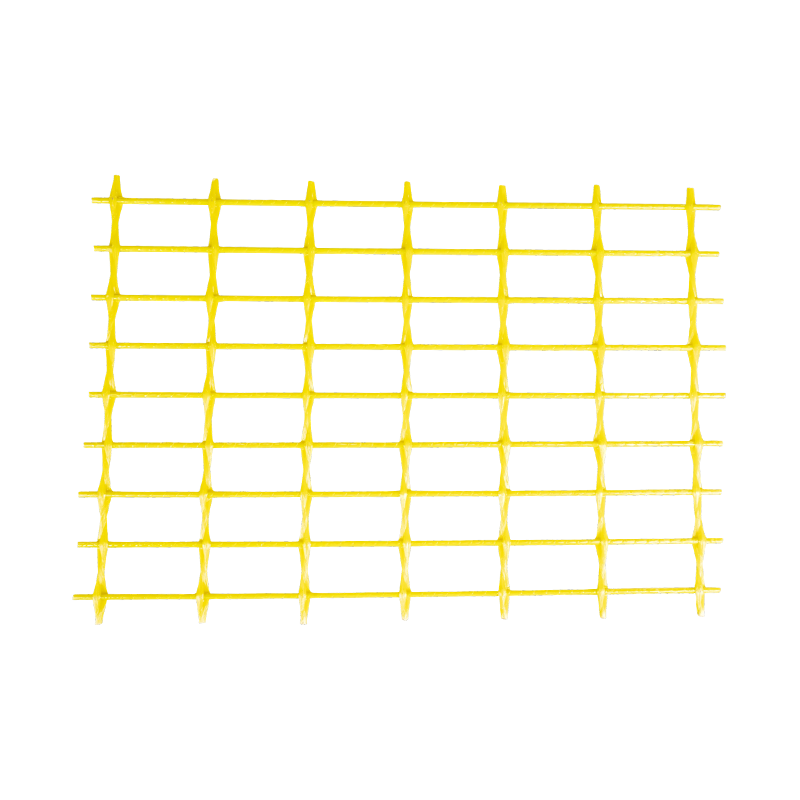
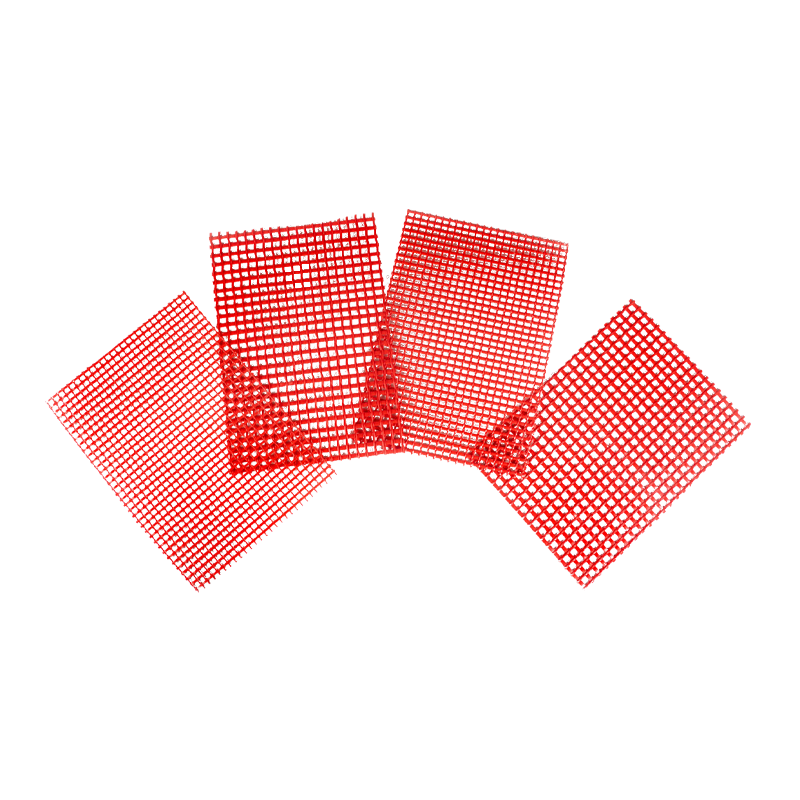
GFRP (Glass Fiber Reinforced Polymer) Epoxy Resin Mesh is a high-performance composite reinforcement material. It is a two-dimensional grid structure made from alkali-resistant glass fibers as the reinforcement and epoxy resin or epoxy vinyl ester resin as the matrix, manufactured through weaving or warp-knitting processes.This product combines advantages such as light weight, high strength, excellent corrosion resistance, good insulation properties, and strong electromagnetic transparency. It is widely used in building structure reinforcement, concrete reinforcement, dry-type transformer insulation support, and other fields, making it an ideal substitute for traditional metal meshes.
GFRP (Glass Reinforced Polymer) Mesh Sheet is a high-performance engineering reinforcement material primarily used for strengthening and crack prevention of concrete structures. This product is made by impregnating glass fibers in a corrosion-resistant polymer resin and weaving them in both warp and weft directions, resulting in extremely high tensile strength and excellent bond strength with concrete. Its core performance lies in its superior corrosion resistance, effectively resisting the erosion of chloride salts and chemicals, thus avoiding the corrosion problems of traditional steel and extending the structural lifespan. As a non-magnetic material, GFRP Mesh Sheet also boasts advantages such as lightweight construction and ease of application, making it suitable for harsh environments such as marine engineering, tunnels, and repair and reinforcement. Choosing GFRP Mesh Sheet provides a durable and reliable reinforcement solution for concrete projects.
A rooftop terrace leaks nine months after a fresh waterproofing job. The coating looks intact, but a hairline crack in the slab has opened a path through the membrane. This is no...
READ MORESuppose you are tiling a bathroom over cement backer board. The joints are taped, the mortar bed is fresh, and the job looks clean. Eight months later, a hairline crack appears e...
READ MOREIf a cement-based wall develops hairline cracks, the repair will fail again unless the render absorbs stress in a controlled way. Fiberglass mesh for concrete is that control lay...
READ MOREFiberglass mesh application is a straightforward but critical decision: you embed a woven glass-fiber fabric into plaster, stucco, concrete, or insulation board to stop cracks an...
READ MOREFiberglass mesh for stucco is a woven alkali-resistant glass fiber fabric that is embedded in the stucco base coat to control cracking and distribute tensile stress. That definit...
READ MOREGFRP (Glass Reinforced Polymer) Mesh Sheet is a high-performance reinforcement material widely used for strengthening and crack prevention of concrete structures. It is manufactured by impregnating glass fibers with corrosion-resistant polymer resin and weaving them in both warp and weft directions. This process gives the material extremely high tensile strength and excellent bond strength with concrete, making it an ideal solution for modern construction projects.
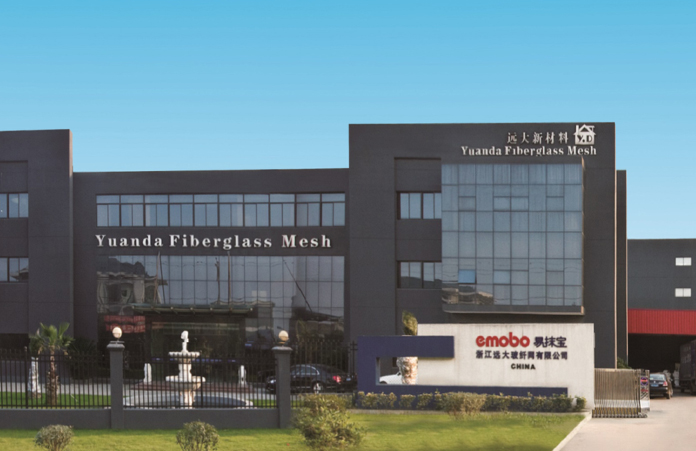
Zhejiang Yuanda Fiberglass Mesh Co., Ltd. was founded in 2000. It is a technology-oriented enterprise specializing in composite reinforcing materials and insulating materials. The company is located in the Yangtze River Delta Economic Circle, near Ningbo and Shanghai ports, providing convenient global logistics. Covering nearly 33,000 square meters, the company operates modern standard workshops to ensure product quality.
Unlike traditional steel reinforcement, GFRP Mesh Sheet is resistant to chloride salts and chemical erosion. Tests show that GFRP can withstand corrosion for over 50 years in marine environments, making it suitable for bridges, tunnels, and coastal structures.
GFRP Mesh Sheet is significantly lighter than steel, with a density of approximately 2.0 g/cm³. Its non-magnetic nature prevents interference in sensitive equipment areas, providing ease of handling and installation.
The surface treatment of glass fibers ensures strong adhesion to concrete. Bond strength can reach 8-10 MPa, effectively preventing cracks and enhancing the durability of reinforced structures.
GFRP Mesh Sheet is widely used across various construction sectors due to its strength and corrosion resistance. Common applications include:
The following table summarizes key technical parameters of GFRP Mesh Sheet:
| Property | Value | Unit |
|---|---|---|
| Tensile Strength | 1000-1200 | MPa |
| Density | 2.0 | g/cm³ |
| Bond Strength | 8-10 | MPa |
GFRP is ideal for crack prevention and strengthening, but in some high-load structural elements, steel may still be required. Hybrid solutions are commonly used.
More than 50 years in non-corrosive environments, and highly durable in marine or chemically aggressive environments.
Yes, its lightweight nature and flexibility make installation straightforward. One worker can handle standard mesh sheets without heavy machinery.
 No. 60, Yiwu East Road, Wufu Industrial Park, Yiting Town, Shangyu City, Zhejiang Province, China
 +86 13606593503
 +86-575-82419001
 sales@yuandafiberglass.com