English
 中文简体
 Español
A 5 × 5 mm woven mesh and a drum of general-purpose laminating resin can look perfectly matched on the bench and still delaminate within a season. The failure is almost never the mesh alone or the resin alone — it is the pairing: binder chemistry, areal weight, resin-to-glass ratio, and cure profile. Fiberglass mesh carries the tensile load and bridges cracks; resin is the matrix that transfers stress between filaments, seals the glass against moisture, and holds the geometry. Matched correctly, the two behave as one material. Matched badly, you get dry patches, resin-rich cracking, and a repair that fails at the same joint twice.
Content
- 1 What Fiberglass Mesh and Resin Do Together
- 2 Pick the Resin First, Then the Mesh
- 3 Mesh Weight, Aperture, and Binder
- 4 On Walls, the Resin Is a Factory Coating
- 5 In Composites, Wet-Out Beats Resin Volume
- 6 Where the Resin Arrives Already Cured
- 7 Six Checks Before a Bulk Order
- 8 Frequently Asked Questions
What Fiberglass Mesh and Resin Do Together
Fiberglass mesh and resin form a two-part system: the mesh carries tensile load and bridges cracks, while the resin transfers stress between filaments, seals the glass from moisture, and locks the geometry. Neither works alone — bare mesh has almost no stiffness across the aperture, and resin alone is brittle and cracks at low strain.
In practice the phrase covers two products that are frequently confused:
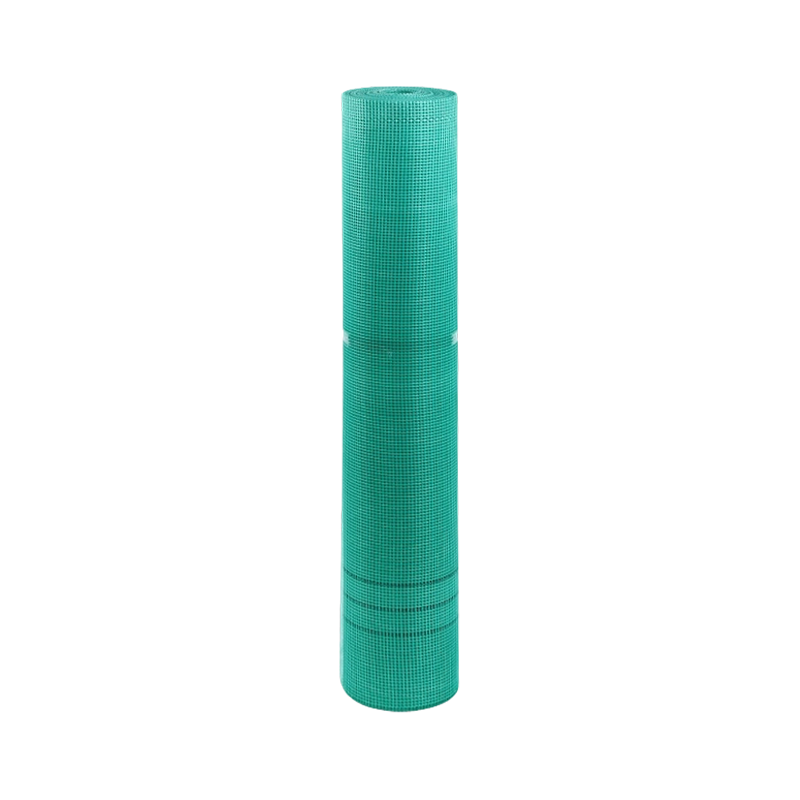
- Woven mesh fabric — E-glass or C-glass yarns woven into an open grid, typically 75–300 g/m² with 4 × 4 mm to 10 × 10 mm apertures, finished with a silane coupling agent or a starch binder.
- Resin — a thermoset (polyester, vinyl ester, epoxy) mixed and applied on site, or a water-based acrylic or styrene-acrylic emulsion applied at the factory to make construction mesh alkali-resistant.
Four variables decide the outcome: the sizing on the glass, the areal weight of the mesh, the resin-to-glass ratio, and the cure schedule. Change one and the same roll of mesh will behave differently.
Pick the Resin First, Then the Mesh
Choose the resin family before the mesh, because the resin fixes the cure schedule, the shrinkage, and the bond chemistry the glass has to survive.
Shrinkage is the variable most often ignored. A general-purpose polyester can shrink 6–8% as it cures, pulling a laminate away from the substrate and leaving print-through on thin panels. Epoxy shrinks 1–3% and bonds more aggressively, which is why structural reinforcement and pre-cured mesh sheets almost always use it.
| Resin family | Typical mesh use | Shrinkage on cure | Practical notes |
|---|---|---|---|
| Orthophthalic polyester | General repair, low-cost laminates | 6–8% | Fast cure, strong styrene odour, weakest moisture resistance |
| Isophthalic polyester | Exterior panels, damp service | 5–7% | Better water resistance, similar handling to ortho |
| Vinyl ester | Tanks, marine, chemical exposure | 4–6% | Excellent glass wet-out, good compromise on cost |
| Epoxy | Structural bonding, GFRP mesh sheet | 1–3% | Best adhesion and lowest shrinkage; requires accurate mixing |
| Acrylic / styrene-acrylic emulsion | Factory coating on construction mesh | Not applicable | Water-based film, provides alkali resistance rather than strength |
Two rules follow. Use silane-sized mesh for anything bonded with polyester, vinyl ester, or epoxy — starch-bound mesh is built for emulsion coating, not laminating. And never pair a fast-cure polyester with a thick multi-layer lay-up, because the exotherm can distort a thin panel before the inner plies wet out.
Mesh Weight, Aperture, and Binder
Match the mesh to the process rather than to the catalogue order: construction reinforcement runs 75–300 g/m², laminating and repair work runs 200–600 g/m², and the aperture decides how much resin the fabric will demand.
- Interior plaster and skim coat: 80–130 g/m², 4 × 4 or 5 × 5 mm aperture.
- Exterior insulation and base coat: 130–165 g/m², 5 × 5 mm, alkali-resistant coating.
- Impact zones and thick render: 300 g/m², 5 × 5 mm or 10 × 10 mm.
- Hand lay-up repair: 300–450 g/m² cloth or open mesh, depending on substrate roughness.
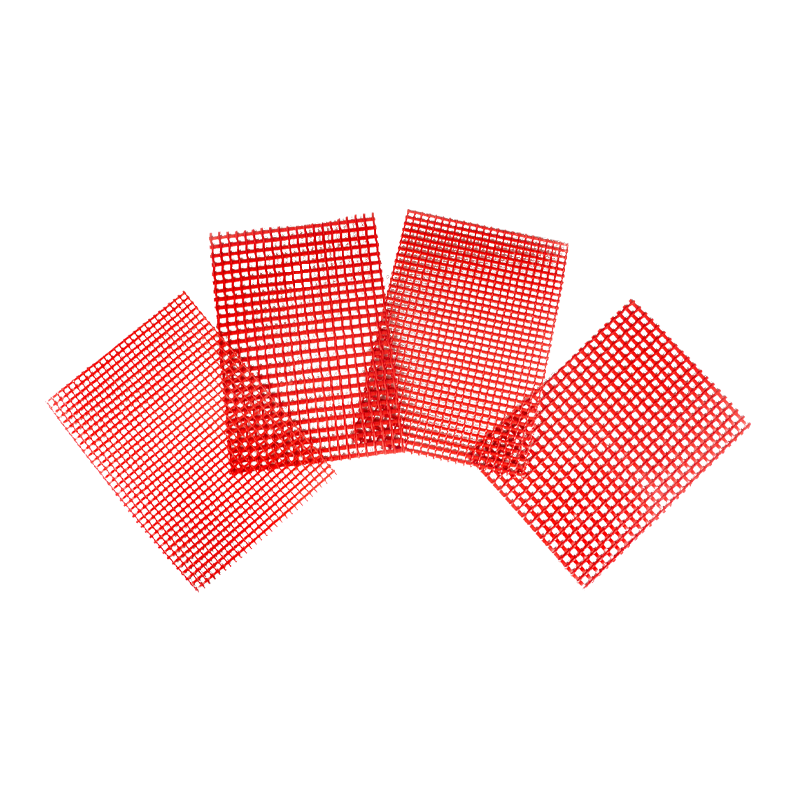
- Pre-cured epoxy mesh sheet: resin content typically 40–60% by weight, fixed in the factory.
A smaller aperture gives a smoother finish but consumes more resin per square metre, because every opening must be filled and every yarn bundle saturated. A 10 × 10 mm mesh drops resin demand noticeably, but the first coat may print through and need a second fill.
On Walls, the Resin Is a Factory Coating
In wall reinforcement, the resin that matters is the factory-applied alkali-resistant coating, not a laminating resin mixed on site; its coating weight — usually 12–20% of the roll weight — largely determines how long the mesh survives in fresh mortar.
Fresh cement mortar sits at pH 12–13 and attacks E-glass quickly, so the coating is a barrier rather than a binder. A mesh labelled "alkali-resistant" without a residual-strength figure is a claim, not a specification: request retained tensile data after 28 days of alkaline ageing, and treat anything below roughly 50% of the original value as unsuitable for exterior work.
Installation matters as much as the coating. Embed the mesh in the base coat while it is still wet, overlap adjacent rolls by about 100 mm, and keep the mesh in the outer third of the render thickness. Mesh laid over a dry coat, or folded around a corner, will not bridge the crack it was bought for.
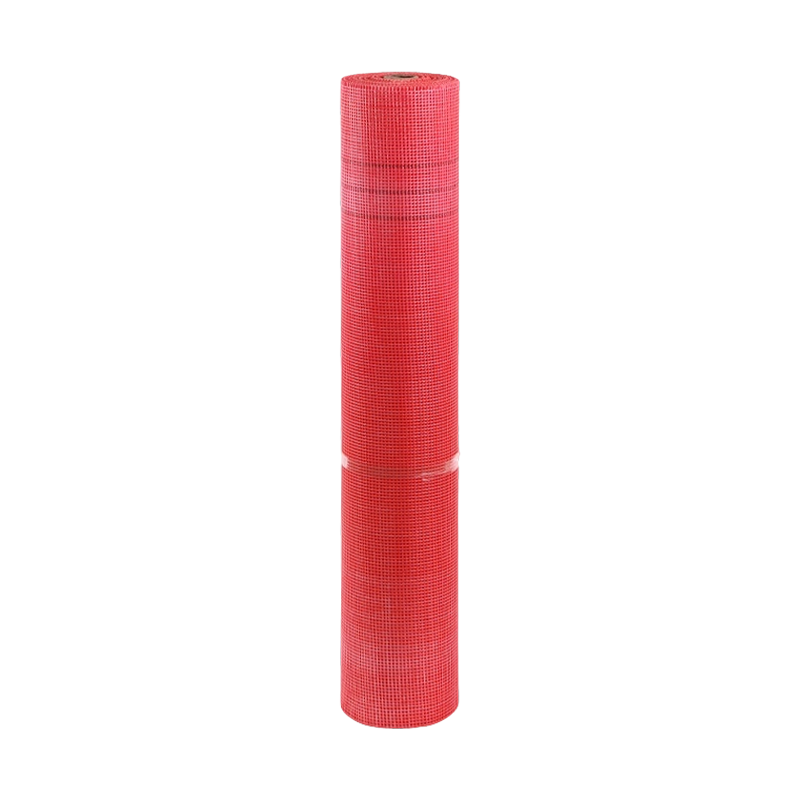
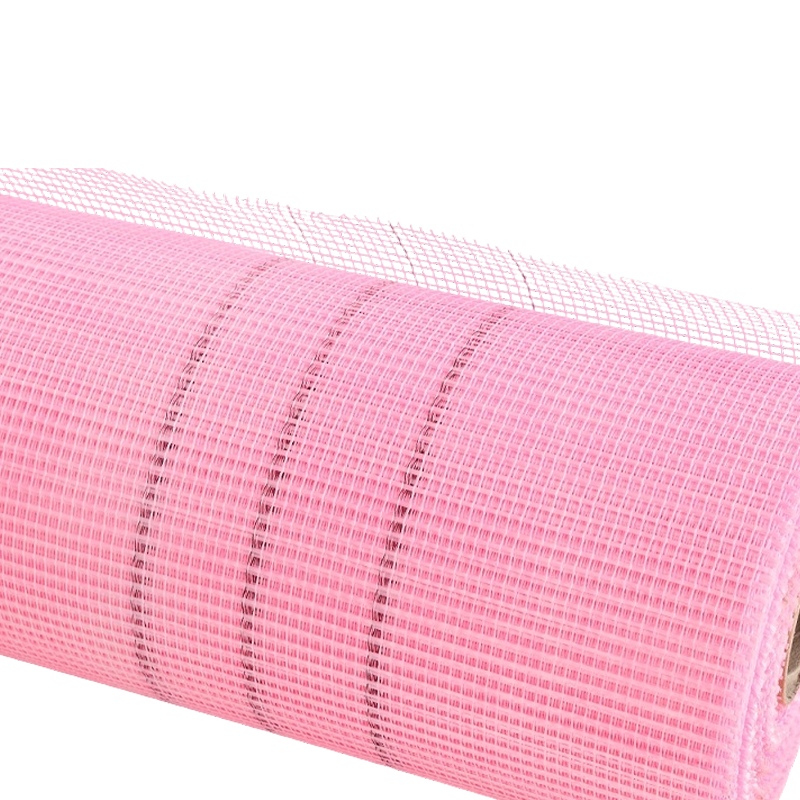 130–160g Alkali-Resistant Fiberglass Mesh for Exterior WallsFor exterior wall insulation systems, this coated glass fiber mesh provides alkali resistance and crack control where wet embedding and overlapped installation are specified.View Product →
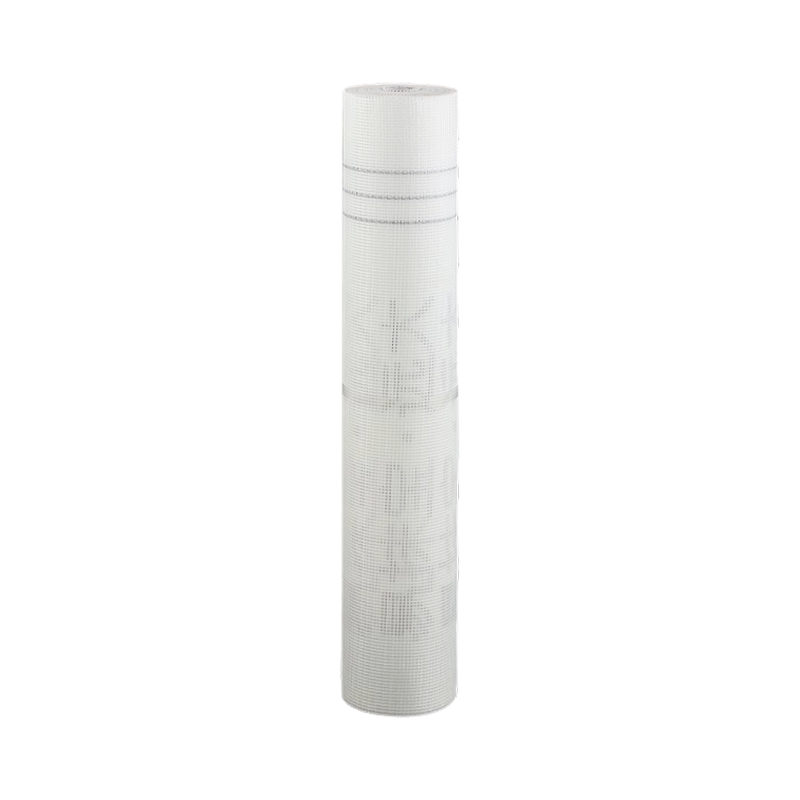
For the 130–165 g/m² band used on exterior walls, a 130/160g outer wall fiberglass mesh fabric with an alkali-resistant coating is the standard specification; interior skim coats normally use the lighter 80/130 g range, while impact zones step up to 300 g. The overlap, tensioning and embedment sequence is set out in the fiberglass mesh fabric applications and installation guide.
In Composites, Wet-Out Beats Resin Volume
In a hand-laminated part, strength comes from wet-out and resin-to-glass ratio, not from the volume of resin poured on; a resin-rich laminate is weaker, heavier and more prone to cracking.
For hand lay-up with 300–450 g/m² mesh or cloth, aim for 55–65% resin by weight. Vacuum bagging or a pre-cured sheet lifts glass content to 50–65% and removes the trapped air that shows up as white patches. Correct wet-out looks uniform and translucent, with individual yarns no longer visible; white streaks mean the sizing is incompatible, the resin is too cold (below roughly 15 °C most polyesters stop wetting out), or the working time has passed and the resin has begun to gel.
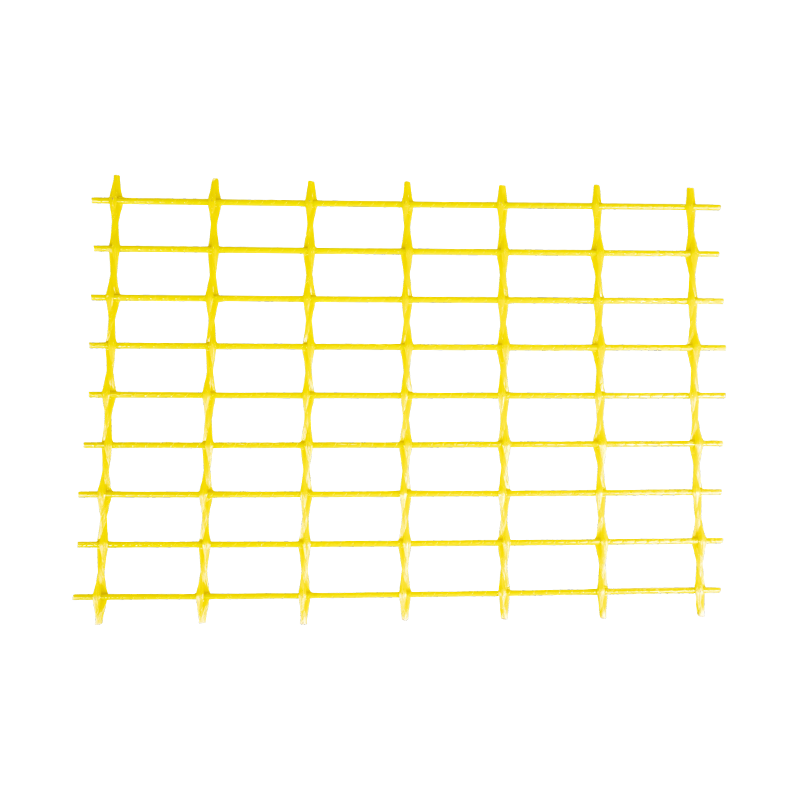
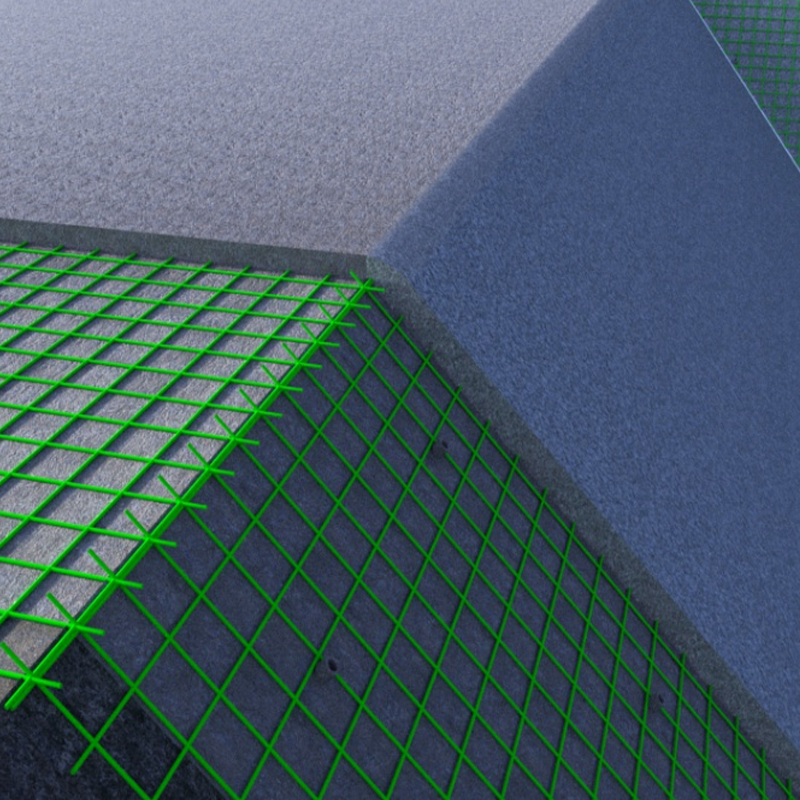 GFRP Epoxy Resin Mesh Sheet for Structural ReinforcementA lightweight, high-strength glass fiber epoxy grid for structural repair and concrete strengthening, with factory-fixed resin ratio and cure.View Product →
Where site mixing cannot be controlled — structural repair, concrete strengthening, ground reinforcement — a GFRP epoxy resin mesh sheet delivers the same mesh-and-resin combination with the ratio and cure fixed at the factory, so installed properties do not depend on how carefully someone measured the hardener.
Where the Resin Arrives Already Cured
Some mesh leaves the factory fully saturated and cured, and there the resin does a different job: electrical insulation rather than structural bonding.
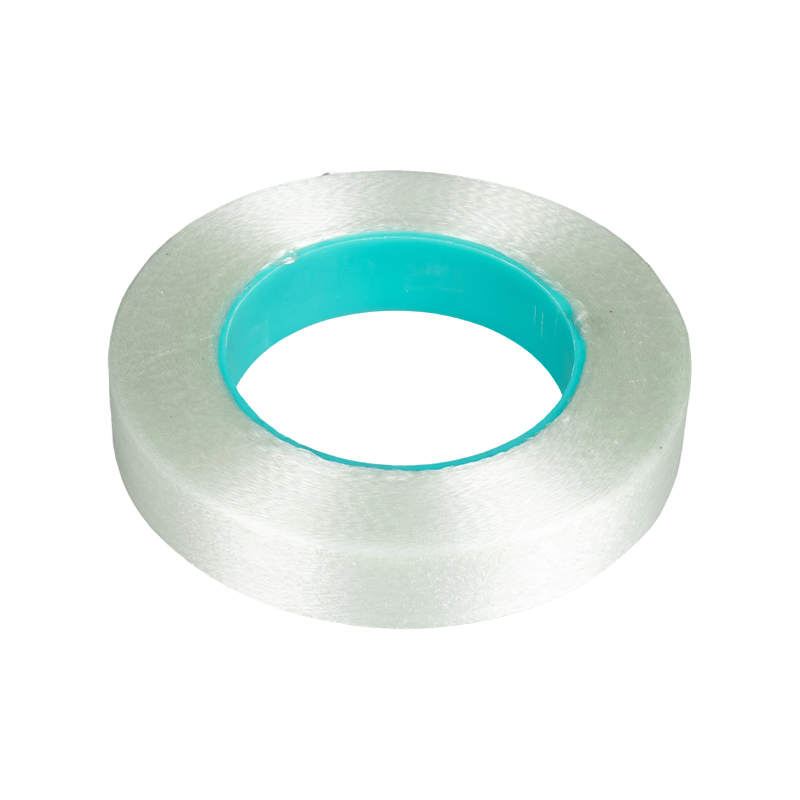
Epoxy-bonded glass mesh cloth for dry-type transformer coils is the clearest example. The mesh reinforces the insulation system mechanically while the cured epoxy supplies dielectric strength, dimensional stability and heat resistance. With no solvent and no site mixing, the insulation value repeats from roll to roll, which is why the format is specified for Class F and Class H coil insulation.
 Epoxy Glass Fiber Mesh Cloth for Dry-type TransformerEpoxy Glass Fiber Mesh Cloth is a high-performance insulating material made from alkali-free, wax-free, silane-treated glass fiber yarn and polyester filament woven in...View Product →
Specify it by resin content, thickness and thermal class, and confirm compatibility with the impregnating varnish used on the coil — two epoxy systems that are each correct can still fail at the interface.
Six Checks Before a Bulk Order
Most field failures trace back to one of six items, and every one of them can be verified with a scale, a ruler and one square metre of resin.
- Areal weight tolerance. Weigh a 100 × 100 mm sample; ±5% is normal commercial tolerance, and anything looser changes your resin demand.
- Aperture and yarn count. Measure ten openings across the roll — a nominal 5 × 5 mm mesh varying by more than 1 mm will not embed evenly.
- Sizing type. Get the binder in writing: silane for resin bonding, starch or PVA for emulsion-coated construction mesh.
- Alkali resistance evidence. Ask for retained strength after 28 days of alkaline ageing, not just the label wording.
- Moisture and packaging. Damp rolls bond badly; confirm shrink-wrapped, dry storage.
- Wet-out trial. Laminate one square metre with the actual resin batch before the container ships.
Data sheets and selection notes for both construction and composite grades sit in the technical resources section.
Frequently Asked Questions
Can I use any fiberglass mesh with any resin?
No. The sizing on the yarn decides compatibility: silane-sized mesh bonds to polyester, vinyl ester and epoxy, while starch- or PVA-bound mesh is made for emulsion coating and will not wet out cleanly in a laminating resin. Open construction mesh and dense laminating cloth are also built for different jobs.
What mesh weight do I need for an exterior wall?
130–165 g/m² with an alkali-resistant coating and a 5 × 5 mm aperture suits most exterior insulation and base coat work. Use 300 g where impact resistance or thick render is required, and 80–130 g for interior skim coats.
Why does my laminate show white, dry patches?
Three causes cover most cases: a sizing mismatch, too little resin for the aperture, or resin worked below about 15 °C where viscosity stops it wetting out. Warm the resin, roll out bubbles, and lay the next ply while the first is still tacky.
Is epoxy always better than polyester for mesh reinforcement?
No. Epoxy wins on adhesion, shrinkage and structural work; polyester wins on cost, cure speed and tolerance of imprecise mixing. Vinyl ester is often the better compromise in wet or chemical service.
How much resin does one square metre of mesh need?
Take the mesh weight and divide by the target glass fraction. A 300 g/m² mesh at 60% resin by weight needs about 0.45 kg of mixed resin per square metre; at 70% resin content it needs about 0.7 kg. Add 10–15% for a porous substrate.
The working order is simple: resin family first, then the sizing, then the mesh weight and aperture the process can actually wet out — and check all three on one square metre before the order ships. Whether the resin is a laminating epoxy mixed on site, an acrylic coating baked onto construction mesh, or a cured epoxy matrix inside an insulation cloth, the failure modes are the same, and they appear in the very first square metre if you look for them.