English
 中文简体
 Español
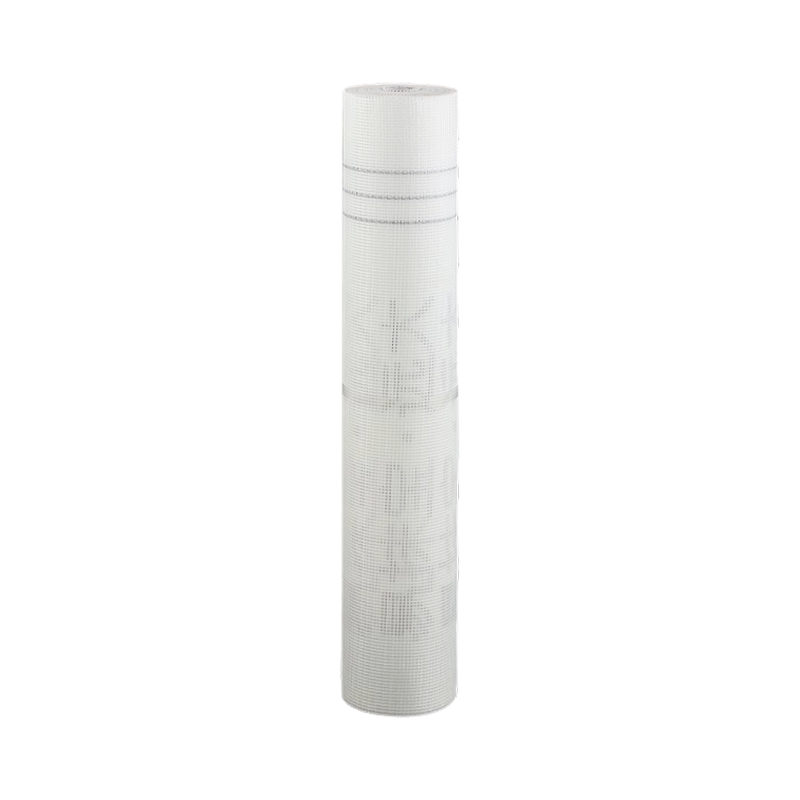
EIFS fiberglass mesh is the alkali-resistant woven glass fabric embedded in the base coat of an exterior insulation and finish system. It is the reinforcement layer that turns a 3 to 6 mm cementitious base coat into a crack-resistant skin, and it is the first component worth checking when a finished wall shows a grid of hairline cracks, star-shaped cracks radiating from window corners, or a hollow-sounding finish.
The short answer, before the detail: for most EIFS facades, specify an alkali-resistant mesh of 160 g/m² or heavier with a 4 × 4 mm to 5 × 5 mm weave, embed it while the base coat is still wet, overlap adjacent sheets by 65 to 100 mm (2.5 to 4 in), and wrap corners and openings with 200 mm (8 in) strips. Mesh below 130 g/m², mesh with no alkali-resistant coating, and mesh laid onto an already-dried base coat are the three most common reasons a facade needs a second visit.
Content
What the Mesh Actually Does in the Wall Assembly
The mesh, not the base coat, carries the tensile load. A cementitious base coat is strong in compression and weak in tension, and it cracks at strains well below the movement a real facade sees. The embedded glass fabric takes over that tensile duty and spreads stress across the whole reinforced skin instead of letting it concentrate at a single point.
That gives the assembly three practical properties:
- Crack control. The reinforced skin bridges the shrinkage and thermal movement a plain base coat cannot.
- Impact resistance. Heavier mesh raises the energy the wall absorbs before the finish chips, which is why ground floors and public areas are specified one grade up.
- Even thickness. The mesh keeps the base coat uniform, so the finish cures without telegraphing the weave.
All three depend on one condition: base coat must sit above and below the mesh. Mesh resting on the surface reinforces nothing.
Specifications That Decide Whether the Mesh Performs
Gram weight and aperture do most of the work, but the coating chemistry decides whether the mesh still performs after a few years of alkaline contact. The table below maps the grades quoted most often onto the jobs they suit.
| Grade (gram weight) | Typical aperture | Where it fits | What to verify before ordering |
|---|---|---|---|
| 80–130 g/m² | 4 × 4 to 5 × 5 mm | Interior patching, low-stress reinforcement, tile backer | Weave uniformity and true roll length |
| 130–160 g/m² | 4 × 4 to 5 × 5 mm | Standard EIFS base coat over EPS or mineral wool board | Alkali-resistant coating and tensile retention data |
| 160–200 g/m² | 5 × 5 to 10 × 10 mm | Ground floor, plinths, high-traffic facades | Tensile strength after NaOH conditioning |
| 300 g/m² | 5 × 5 to 12 × 12 mm | Heavy-duty reinforcement, stone-look and mechanically fixed systems | Base coat consumption per m² and embedment window |
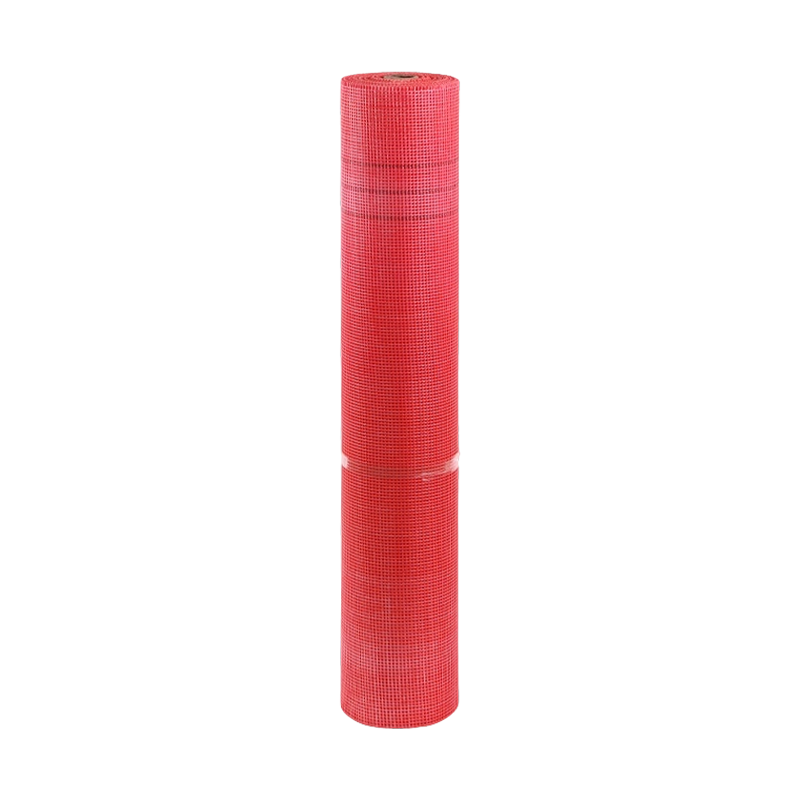
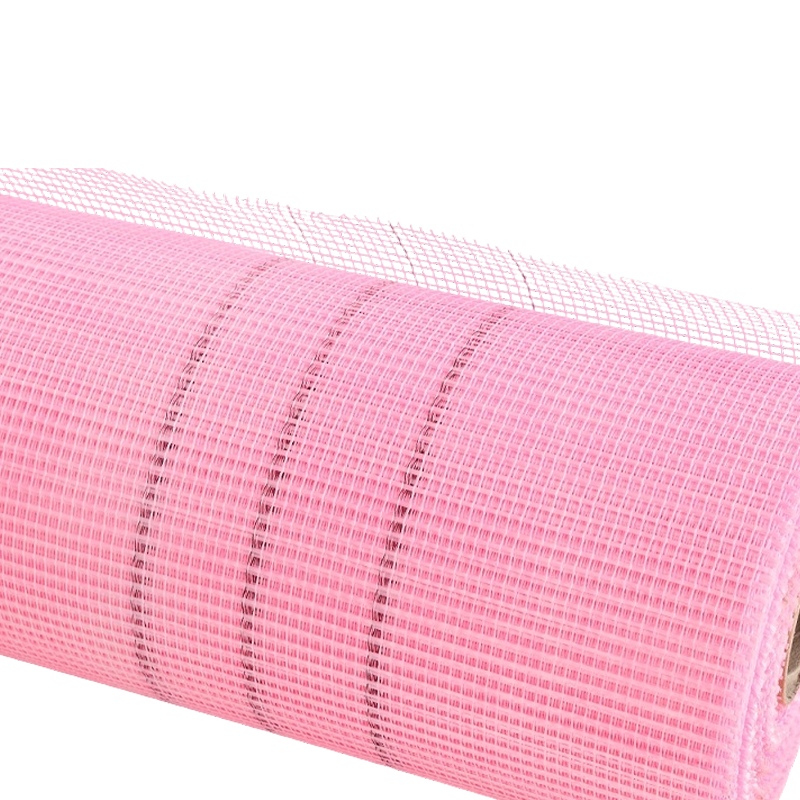 130–160 g/m² Alkali-Resistant Fiberglass Mesh for Exterior Wall InsulationCoated woven glass fabric mesh for exterior insulation, with crack resistance and alkali-conditioned tensile strength data for grade comparison.View Product →
Two numbers belong in every specification, whichever grade you pick: warp and weft tensile strength in N/50 mm, and the same figures measured again after alkali conditioning. Everything else is negotiable.
Alkali Resistance: The Test Buyers Rarely Ask For
Untreated E-glass mesh can lose a large share of its tensile strength after prolonged contact with a cementitious base coat. Portland-based base coats sit around pH 12 to 13, and that environment attacks the glass filaments themselves. The coating, whether styrene-acrylic, acrylic or zirconium-based, is what slows that attack down.
The difference is measurable. Mesh tested under EN 13496 or ASTM E2098 after a 100-hour soak in alkaline solution typically has to retain at least half of its original tensile strength to pass. Cheap mesh often has no retention data at all, and that absence is the real warning sign.
Ask a supplier for four things:
- The 100-hour alkali soak retention figure, warp and weft.
- The unaged tensile figure, so the retention percentage can be checked.
- Coating type and coat weight applied per m² of fabric.
- A batch sample you can cut and test independently, if the project value justifies it.
Installation: The Sequence and the Numbers That Matter
Mesh has to go into wet base coat, never on top of a dried surface. The rest of the sequence is a matter of holding tolerances rather than technique. For the same steps with field detail, see our fiberglass mesh fabric applications, selection and installation guide.
- Check the board surface. Insulation board should be flat and sound, with joints tight enough that the mesh does not bridge a step.
- Apply the first base coat. Trowel on roughly 3 mm and work in an area small enough that the coat cannot skin over first.
- Embed the mesh while wet. Press it in from the top down with a stainless trowel, working out wrinkles and air pockets. Dry-laid mesh repels the coat and leaves voids.
- Overlap 65 to 100 mm. Standard mesh is usually overlapped about 65 mm; heavy 300 g/m² mesh and facades in high-movement climates go to 100 mm.
- Reinforce corners and openings. Window and door corners take a diagonal 200 × 300 mm strip before the field mesh, and openings are wrapped with at least 200 mm turned back onto the wall.
- Apply the second base coat. Cover the mesh completely and bring the total to the system's specified thickness, usually 3 to 6 mm. The weave should never print through the finished surface.
- Cure before the finish coat. Allow at least 24 hours, longer in cool or humid conditions.
The Mistakes That Come Back as Cracks
- Mesh laid onto a dry base coat, so it is mechanically locked to nothing.
- Overlaps under 50 mm, creating an unreinforced seam exactly where stress concentrates.
- Corners wrapped without a diagonal strip, producing the classic star crack.
- Base coat too thin over the mesh, so the weave reads through the finish.
- Mesh stopped short at the base of the wall, where impact loads are highest.
- Mixing grades on one facade, so the wall moves unevenly.
Buying EIFS Mesh Without Creating a Callback
Buy on data and batch consistency, not on price per roll. Mesh is a small share of the installed cost of a facade and a large share of the risk, so the purchase order should carry numbers that make a claim checkable.
- Grade in g/m² with a stated tolerance, typically ±5%.
- Aperture in mm, plus weave type.
- Roll width and length with tolerances, so coverage estimates hold.
- Tensile strength in N/50 mm, warp and weft, before and after alkali conditioning.
- Coating type, and confirmation that rolls are moisture-protected in transit.
For a complete EIFS package, keep 300 g/m² mesh in the schedule for ground-floor and high-impact zones, and check that the same mill can supply it alongside standard 130 to 160 g/m² fabric.
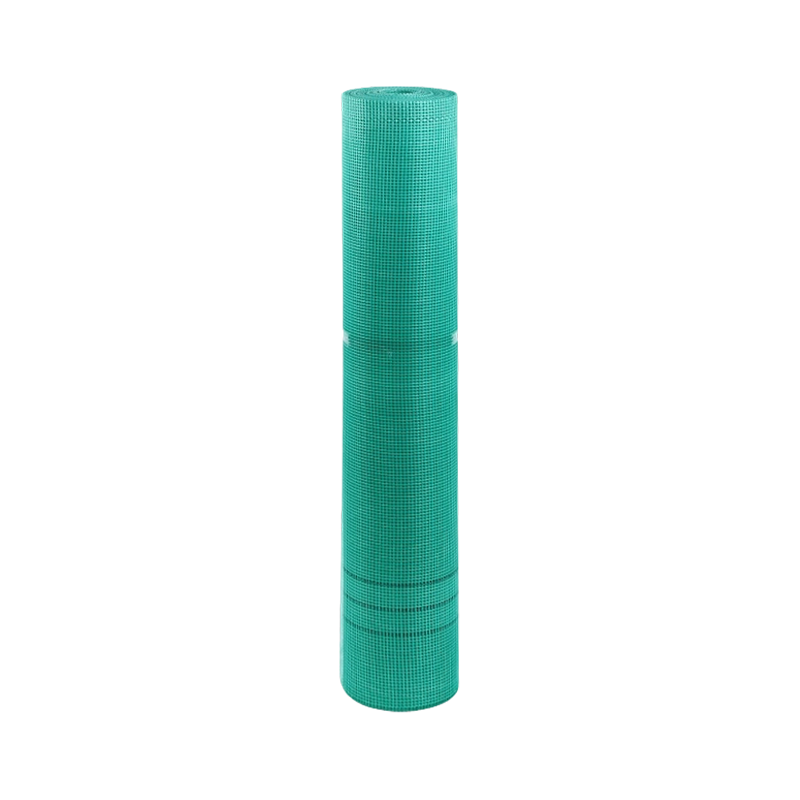
 300 g/m² Reinforced Alkali-Resistant Fiberglass Mesh FabricHeavier 300 g/m² alkali-resistant fiberglass mesh for high-impact EIFS zones and cement mortar, with styrene-butadiene or acrylic coating.View Product →
Where a project needs a stiffer reinforcement or a mechanically fixed base, a glass-fiber-reinforced polymer mesh sheet is a parallel option rather than a direct substitute. Background on both product families sits in our technical and manufacturing resources.
Frequently Asked Questions
What gram weight do I need for an EIFS facade?
160 g/m² is the common baseline for standard facades. Move to 200 g/m² or more for ground floors and high-traffic zones, and to 300 g/m² where the system calls for heavy-duty reinforcement.
Can ordinary fiberglass mesh be used in EIFS?
No. Mesh without an alkali-resistant coating degrades in the alkaline base coat. Ask for retention data after a 100-hour soak before accepting any roll.
How much should mesh sheets overlap?
65 mm is the usual minimum, and 100 mm on heavy mesh or where the facade sees wide temperature swings. Irregular overlaps are worse than one deliberate, uniform figure.
Does mesh have to run behind corners and openings?
Yes. A diagonal 200 × 300 mm strip at each window and door corner, plus a 200 mm wrap around the opening, is what prevents the stress concentration behind star cracks.
How long before the finish coat goes on?
At least 24 hours of curing under normal conditions, and longer in cool or humid weather. The base coat should be firm and uniformly colored first.
What widths and lengths are standard?
Rolls are commonly 1 m wide and 50 m long, with wider and longer options available. Confirm the width tolerance, because coverage estimates depend on it.
EIFS fiberglass mesh is inexpensive and unforgiving. The grade, the coating and the embedment decide whether a facade stays smooth or starts cracking within a season. Fix the gram weight, the aperture, the alkali retention figure, the overlap and the corner detail at specification stage, check them on site, and the finish coat will do the rest.