English
 中文简体
中文简体 Español
The most commonly used backers for fiberglass mesh are cement board (also called cementitious backer unit or CBU), cured concrete, masonry block, and rigid foam insulation boards. For wet areas such as showers and tub surrounds, cement board or fiber cement panels are the industry standard. For EIFS (Exterior Insulation and Finish Systems), expanded polystyrene (EPS) foam is the primary backer. The correct choice depends on the application environment, load requirements, moisture exposure, and the type of finish being applied over the mesh.
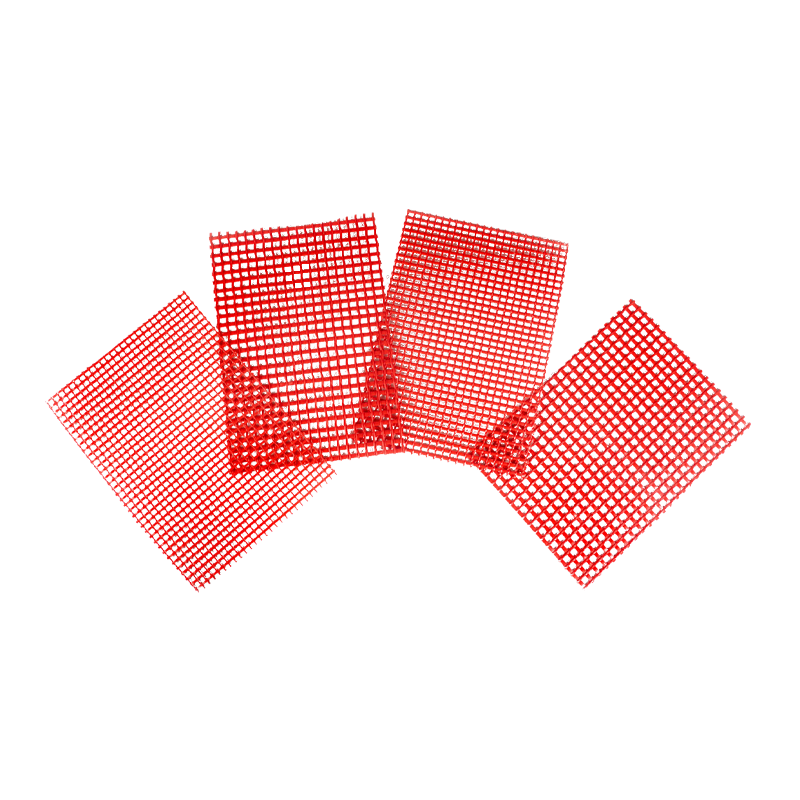
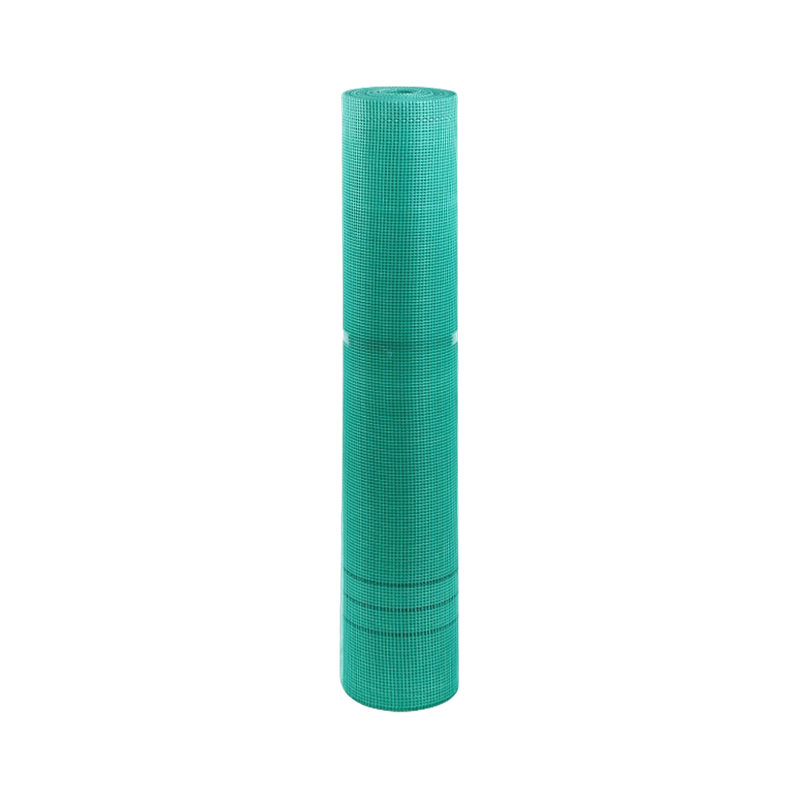
Fiberglass mesh is a reinforcing fabric used in a wide range of construction, renovation, and repair projects. It adds tensile strength to surfaces that would otherwise crack or delaminate under stress, thermal movement, or moisture cycling. However, the mesh itself provides no structural support on its own. It must be embedded in or adhered to a compatible backer material that provides the rigid substrate the mesh can reinforce effectively.
Choosing the wrong backer for fiberglass mesh is a leading cause of tile failure, stucco cracking, and EIFS delamination. According to the Tile Council of North America (TCNA), improper substrate selection accounts for a significant proportion of tile installation failures reported in warranty claims. This guide covers every major backer option, how they interact with fiberglass mesh, and how to choose the right combination for your specific project.
Content
- 1 Why the Backer Material Matters When Using Fiberglass Mesh
- 2 Types of Backers That Can Be Used with Fiberglass Mesh
- 3 Backer Material Comparison for Fiberglass Mesh Applications
- 4 Matching Fiberglass Mesh Weight and Grade to the Backer Type
- 5 Critical Requirement: Why Alkali-Resistant Fiberglass Mesh Is Mandatory with Cement-Based Backers
- 6 What Not to Use as a Backer for Fiberglass Mesh
- 7 How to Install Fiberglass Mesh Over a Backer: Best Practices
- 8 Frequently Asked Questions: Backers for Fiberglass Mesh
- 9 Conclusion: Choosing the Right Backer for Fiberglass Mesh
Why the Backer Material Matters When Using Fiberglass Mesh
The backer provides the dimensional stability, moisture resistance, and bonding surface that allows fiberglass mesh to perform its reinforcing function over the long term. Fiberglass mesh embedded in mortar or adhesive over a stable backer distributes stress across the surface; the same mesh over a flexible, wet-sensitive, or chemically incompatible substrate will fail regardless of mesh quality.
Key functions a compatible backer must provide include:
- Dimensional stability: The backer must not expand, contract, or deflect significantly under load or moisture changes. Deflection of more than L/360 (where L is the span length) is cited by the TCNA as the threshold at which tile and grout cracking becomes likely.
- Moisture resistance: In wet environments, the backer must resist water absorption and the freeze-thaw cycling that causes conventional drywall to deteriorate and lose its bond with mesh-embedded coatings.
- Mechanical bond surface: The backer must provide a surface to which thin-set mortar, basecoat, or adhesive can bond at the required strength. Portland cement-based backers typically achieve bond strengths exceeding 200 psi, well above the 50 psi minimum specified by ANSI A118.4 for thin-set systems.
- Compatibility with the finish system: Some backers react chemically with certain coatings. Standard gypsum drywall, for example, deteriorates when in contact with alkaline Portland cement mortars over time in moisture-prone locations.
Types of Backers That Can Be Used with Fiberglass Mesh
There are six primary backer types used with fiberglass mesh in modern construction, each suited to different application environments and finish systems.
1. Cement Board (Cementitious Backer Unit)
Cement board is the most widely recommended backer for fiberglass mesh in wet interior applications, including shower walls, tub surrounds, and kitchen backsplashes. It consists of a Portland cement core reinforced with fiberglass mesh on both faces, making it dimensionally stable when wet, alkali-resistant, and highly compatible with thin-set mortars.
Key specifications and performance characteristics:
- Standard thicknesses: 6mm (1/4 in) for wall applications, 12mm (1/2 in) and 19mm (3/4 in) for floor applications.
- Water absorption: Cement board does not deteriorate from water exposure, though it is not waterproof. A separate waterproofing membrane applied over the cement board before tiling is required in continuously wet areas per TCNA guidelines.
- Fiberglass mesh tape at joints: When cement board panels are installed, the joints between panels must be taped with alkali-resistant fiberglass mesh tape and filled with thin-set mortar before the finish layer is applied. Standard paper tape is not compatible due to alkaline degradation.
- Weight: Approximately 3.2 kg per square foot (for 12mm thickness), heavier than gypsum alternatives, which affects structural load calculations in floor applications.
2. Fiber Cement Board
Fiber cement board combines Portland cement with cellulose fibers (and sometimes sand), producing a panel that is lighter than standard cement board while offering comparable moisture resistance and dimensional stability.
Fiber cement panels are frequently used as a backer for fiberglass mesh in exterior cladding systems and flooring underlayment. In flooring applications, their lower weight (approximately 2.0 to 2.4 kg per square foot for 6mm thickness) is a practical advantage over traditional cement board. Fiber cement's slightly higher flexibility compared to standard CBU makes it better suited to installations over wood-framed subfloors where minor deflection is unavoidable.
When used as a substrate for fiberglass mesh-reinforced thin-coat plaster or stucco systems, fiber cement panels must be primed with an alkali-resistant primer before coating application to prevent efflorescence migration through the finish layer.
3. Expanded Polystyrene (EPS) Foam Insulation Board
EPS foam board is the primary backer material in EIFS (Exterior Insulation and Finish Systems), where fiberglass mesh is embedded in a polymer-modified basecoat applied directly over the foam surface.
In EIFS assemblies, the EPS provides continuous insulation (R-values ranging from R-4 per inch to R-4.4 per inch depending on density), while the fiberglass mesh embedded in the basecoat provides the tensile reinforcement that prevents impact cracking and thermal movement cracking in the finish coat. Standard EIFS practice, as defined by EIMA (EIFS Industry Members Association) guidelines, specifies a minimum 4 oz per square yard (136 g/m2) standard mesh for field areas and a heavier 15 oz per square yard (508 g/m2) detail mesh or corner bead at all transitions, openings, and corners.
EPS density used as a backer for EIFS fiberglass mesh systems is typically Type I (0.90 lb/ft3) to Type II (1.25 lb/ft3). Higher density EPS (Type VIII, 2.0 lb/ft3) is specified in high-impact zones such as the first 1.8 meters (6 feet) of a building's exterior wall, where pedestrian impact is possible.
4. Concrete and Masonry Substrates
Poured concrete, concrete masonry units (CMU), and brick masonry are excellent natural backers for fiberglass mesh-reinforced repair mortars, stucco systems, and resurfacing coatings because they share compatible alkalinity and thermal expansion characteristics.
In concrete repair and resurfacing applications, fiberglass mesh is embedded in a polymer-modified mortar applied over the prepared concrete surface. The mesh prevents the repair mortar from cracking as it cures and accommodates the slight differential thermal movement between the new overlay and the existing concrete substrate. Alkali-resistant (AR) fiberglass mesh is mandatory in direct contact with concrete or mortar, as standard E-glass fiberglass dissolves in the high-pH environment (pH 12 to 13) of Portland cement matrices within 12 to 18 months of installation, according to research published in the journal Cement and Concrete Composites.
For stucco applications over concrete masonry, a bonding agent or dash coat is often applied first to improve mechanical adhesion between the masonry surface and the fiberglass mesh-reinforced basecoat. Without this preparation, the smooth face of dense concrete blocks provides insufficient mechanical keying for the stucco system.
5. Gypsum-Based Backers (Moisture-Resistant and Glass Mat)
Standard moisture-resistant gypsum board (commonly called greenboard) is not a suitable backer for fiberglass mesh in wet areas, but glass mat gypsum panels represent a significantly improved alternative that is code-accepted in certain wet area applications.
Glass mat gypsum panels replace the paper face of standard drywall with a fiberglass mat laminated directly to the gypsum core. This eliminates the paper that absorbs moisture and supports mold growth. These panels are classified as water-resistant per ASTM C1178 and are permitted by the International Residential Code (IRC) as a tile backer in wet areas provided a waterproofing membrane is applied over the panel surface before tiling.
When fiberglass mesh tape is used at the joints of glass mat gypsum panels, the setting compound or thin-set used to embed the mesh must be alkali-tolerant and compatible with the panel's glass mat surface. Conventional all-purpose joint compound is not suitable at joints that will receive thin-set mortar over tile.
6. Rigid Foam with Embedded Mesh (Structural Insulated Panels)
In some specialty applications, polyisocyanurate (polyiso) or extruded polystyrene (XPS) rigid foam board is used as both insulation and backer for fiberglass mesh-reinforced thin-coat finishes on interior walls and ceilings.
This approach is most common in cold storage facilities, industrial buildings, and prefabricated modular construction where continuous thermal performance is required without sacrificing finish quality. The foam surface must be mechanically fastened and adhesively secured, and the fiberglass mesh must be embedded with an elastomeric or polymer-modified basecoat specifically formulated for low-porosity foam substrates, as standard Portland cement mortars do not adhere reliably to foam board surfaces without a bonding primer.
Backer Material Comparison for Fiberglass Mesh Applications
Selecting the best backer for fiberglass mesh requires balancing moisture resistance, structural performance, thermal properties, cost, and code compliance for the specific application.
| Backer Type | Typical Applications | Moisture Resistance | Insulation Value | Weight (approx) | Relative Cost | AR Mesh Required? |
|---|---|---|---|---|---|---|
| Cement Board (CBU) | Showers, tub surrounds, floors, countertops | Excellent | None | Heavy (3.2 kg/sq ft at 12mm) | Moderate | Yes |
| Fiber Cement Board | Exterior cladding, floor underlayment, wet areas | Excellent | None | Medium (2.2 kg/sq ft at 6mm) | Moderate | Yes |
| EPS Foam Board | EIFS exterior walls, stucco base, thermal wraps | Good (with drainage plane) | High (R-4 to R-4.4 per inch) | Very light (0.05 kg/sq ft) | Low | Yes |
| Poured Concrete / CMU | Concrete repair, stucco, resurfacing overlays | Excellent | Low | Very heavy (structural) | Varies (existing structure) | Yes (critical) |
| Glass Mat Gypsum | Interior wet areas (with membrane), drywall zones | Good (with waterproofing) | None | Light (1.6 kg/sq ft at 12mm) | Low to moderate | Yes |
| Polyiso / XPS Foam | Cold storage, industrial, prefab panels | Excellent (XPS is vapor-resistant) | Very high (R-6 to R-7 per inch) | Very light | Moderate to high | Yes |
Matching Fiberglass Mesh Weight and Grade to the Backer Type
Different backers and finish systems require different fiberglass mesh weights, and using an undersized mesh over a demanding backer type is as problematic as choosing the wrong backer itself.
| Application | Recommended Backer | Mesh Weight | Mesh Type | Industry Standard |
|---|---|---|---|---|
| Tile backer joint tape | Cement board, fiber cement | 50 mm wide tape, 4 oz/yd2 | AR self-adhesive mesh tape | TCNA B412, ANSI A108.11 |
| EIFS standard field area | EPS foam, Type I or II | 4 to 6 oz/yd2 (136 to 203 g/m2) | Standard AR open-weave mesh | EIMA 101.86, ASTM E2568 |
| EIFS high-impact zone | EPS Type VIII high-density | 15 to 20 oz/yd2 (508 to 678 g/m2) | Heavy-duty AR mesh | ASTM E2568 Level 2 impact |
| Concrete repair overlay | Existing concrete substrate | 6 to 8 oz/yd2 (203 to 271 g/m2) | AR woven fiberglass mesh | ACI 546R concrete repair guide |
| Stucco over CMU | Concrete masonry block | 4 to 6 oz/yd2 | AR open-weave mesh | ASTM C926 stucco standard |
| Drywall joint finishing | Glass mat gypsum panel | 2 to 4 oz/yd2 tape | Self-adhesive fiberglass mesh tape | ASTM C474 joint treatment |
Critical Requirement: Why Alkali-Resistant Fiberglass Mesh Is Mandatory with Cement-Based Backers
Standard E-glass fiberglass mesh degrades rapidly and loses most of its tensile strength within 12 to 24 months when embedded in Portland cement mortar, making alkali-resistant (AR) coated fiberglass mesh a non-negotiable requirement for any cementitious backer application.
Portland cement produces a highly alkaline pore solution (pH 12.5 to 13.5) when it hydrates. At this pH level, silica in standard E-glass fibers undergoes chemical dissolution, reducing the fiber diameter, weakening the fiber bundle, and ultimately destroying the mechanical integrity of the mesh reinforcement. Research published in the journal Construction and Building Materials has documented tensile strength losses of 40 to 70 percent in non-AR fiberglass mesh embedded in cement mortar after accelerated aging equivalent to 5 years of field exposure.
Alkali-resistant fiberglass mesh is manufactured with a zirconia (ZrO2) content of 16 percent or higher in the glass composition, which dramatically slows alkali attack. Additionally, the mesh is coated with a polymer (typically PVC or acrylic latex) that provides a physical barrier between the glass fibers and the alkaline mortar environment. AR-coated mesh retains more than 85 percent of its tensile strength after the same accelerated aging test conditions, according to EIMA standard test protocols.
The practical implication: any fiberglass mesh product used with cement board, fiber cement, concrete, masonry, or EPS foam in an EIFS system must carry a clear designation of alkali resistance, either as AR-glass composition, polymer coating, or both. Verify this in the product data sheet before purchase.
What Not to Use as a Backer for Fiberglass Mesh
Several commonly available materials are unsuitable as backers for fiberglass mesh because they lack the dimensional stability, moisture resistance, or chemical compatibility required for reliable long-term performance.
- Standard paper-faced drywall (gypsum board) in wet areas: Paper-faced gypsum board absorbs moisture, loses structural integrity, supports mold colonization, and fails to maintain bond with thin-set mortar in continuously wet environments. The IRC explicitly prohibits standard drywall as a tile backer in shower enclosures and tub surrounds.
- OSB (Oriented Strand Board) without waterproofing: OSB expands significantly when wet (up to 15 percent thickness swell after saturation per APA testing), causing the overlying mesh-reinforced finish to crack and delaminate. If OSB is used as a structural sheathing beneath an EIFS system, a code-compliant water-resistive barrier (WRB) and drainage plane must separate the OSB from the EIFS basecoat.
- Plywood in continuously wet areas: Exterior-rated plywood performs better than OSB but still expands and contracts significantly with moisture cycling, generating stresses that exceed the crack-bridging capability of standard fiberglass mesh systems. Plywood is not recommended by the TCNA as a direct substrate for tile in wet areas without a bonded waterproof membrane that accommodates the substrate movement.
- Standard (non-AR) fiberglass mesh with cementitious backers: As detailed above, E-glass mesh without alkali-resistant treatment degrades in cement environments and should never be used as a backer-system component regardless of how durable the backer itself is.
- Vinyl-faced foam boards as direct EIFS substrates: Foam boards with foil or vinyl facings prevent the EIFS basecoat from bonding mechanically to the substrate. These faced foams require complete face removal or a bonding primer system before use as an EIFS backer.
How to Install Fiberglass Mesh Over a Backer: Best Practices
Correct installation technique is as important as material selection in determining whether a fiberglass mesh and backer system achieves its rated performance over the life of the structure.
For Cement Board and Fiber Cement Panel Joints
- Leave a 3mm (1/8 inch) gap between adjacent panels at all joints to allow for thermal expansion without panel buckling.
- Apply a continuous bed of thin-set mortar over the joint and immediately press AR fiberglass mesh tape into the wet mortar, centering the tape over the joint.
- Apply a second skim coat of thin-set over the embedded tape, feathering the edges to blend with the panel surface. Allow to cure for a minimum of 24 hours before applying tile or finish coating.
- At inside corners, fold the mesh tape into the corner rather than butting two pieces; a continuous folded piece prevents corner joint cracking more effectively than two abutting pieces of tape.
For EIFS Applications Over EPS Foam
- Apply the polymer-modified basecoat to the EPS surface at a minimum thickness of 3mm (1/8 inch) using a notched trowel or spray application per manufacturer specifications.
- Immediately embed the AR fiberglass mesh into the wet basecoat, starting from the top and working downward. Use a flat trowel or plastic float to fully embed the mesh so no mesh strands are visible on the surface.
- At all exterior corners, transitions, and openings, install diagonal reinforcing strips of mesh (at least 200mm x 300mm) at 45 degrees before the field mesh, as stress concentrations at these locations are significantly higher than at field areas.
- Overlap adjacent sheets of mesh a minimum of 100mm (4 inches) at all seams. Do not butt-join mesh sheets, as butt joints represent a zero-reinforcement zone that will crack under thermal cycling.
- Allow the basecoat to cure for 24 to 48 hours before applying the EIFS finish coat.
Frequently Asked Questions: Backers for Fiberglass Mesh
Conclusion: Choosing the Right Backer for Fiberglass Mesh
The right backer for fiberglass mesh is determined primarily by the application environment and the finish system being applied over the mesh.
For interior wet areas such as showers and tub surrounds, cement board or fiber cement panels are the standard choice, with fiberglass mesh tape embedded in thin-set at all joints. For exterior wall insulation systems (EIFS), EPS foam board is the designed backer, with standard-weight AR mesh in field areas and heavy-duty mesh at high-impact zones and transitions. For concrete repair and resurfacing, the existing concrete or masonry surface serves as the backer, provided it is properly prepared and primed. For interior dry areas with gypsum substrates, glass mat gypsum panels improve on standard drywall where some moisture resistance is required.
Across all backer types that involve cementitious materials, alkali-resistant fiberglass mesh is a mandatory, non-negotiable specification. Using standard E-glass mesh over cement board, concrete, or in an EIFS basecoat will result in progressive strength loss that undermines the entire installation within a few years of service.
When in doubt, consult the relevant industry standard for your application: TCNA Handbook for tile and backer board, EIMA guidelines for EIFS, ASTM C926 for stucco, and ACI 546R for concrete repair. These standards specify not only the backer type and mesh grade required but also the complete assembly sequence, fastener schedule, and quality verification steps that ensure the system performs as designed for the life of the building.