English
 中文简体
中文简体 Español
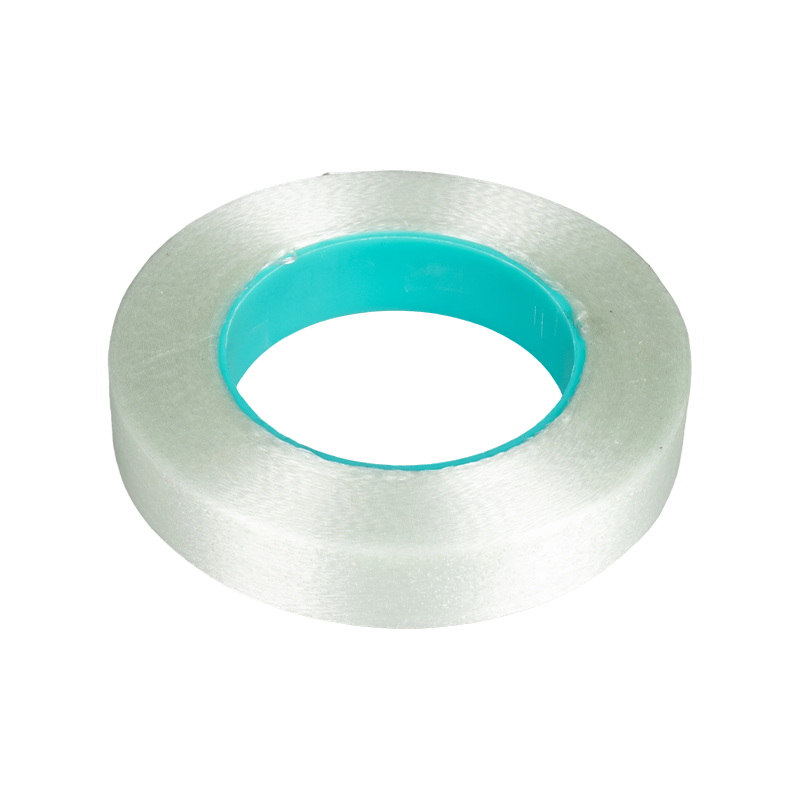
Suppose you are tiling a bathroom over cement backer board. The joints are taped, the mortar bed is fresh, and the job looks clean. Eight months later, a hairline crack appears exactly along one taped seam. The tile did not fail and the adhesive did not fail. In most cases, the reinforcing tape failed because it was not alkali resistant. Alkali resistant fiberglass mesh tape is a coated, woven glass fiber tape engineered to keep its tensile strength when embedded in the high-pH environment of cement, thin-set mortar, and render, conditions in which ordinary joint tape breaks down.
Here is the practical summary before the details: on any cement-based substrate, choose a polymer-coated alkali resistant fiberglass mesh tape, verify its weight and mesh count, embed it fully with a compatible mortar, and the seam will not be the first part of the assembly to fail. This article covers what makes the tape alkali resistant, where the standard requires it, how to tell real AR tape from cheap imitations, and how to install it correctly.
Content
What Is Alkali Resistant Fiberglass Mesh Tape?
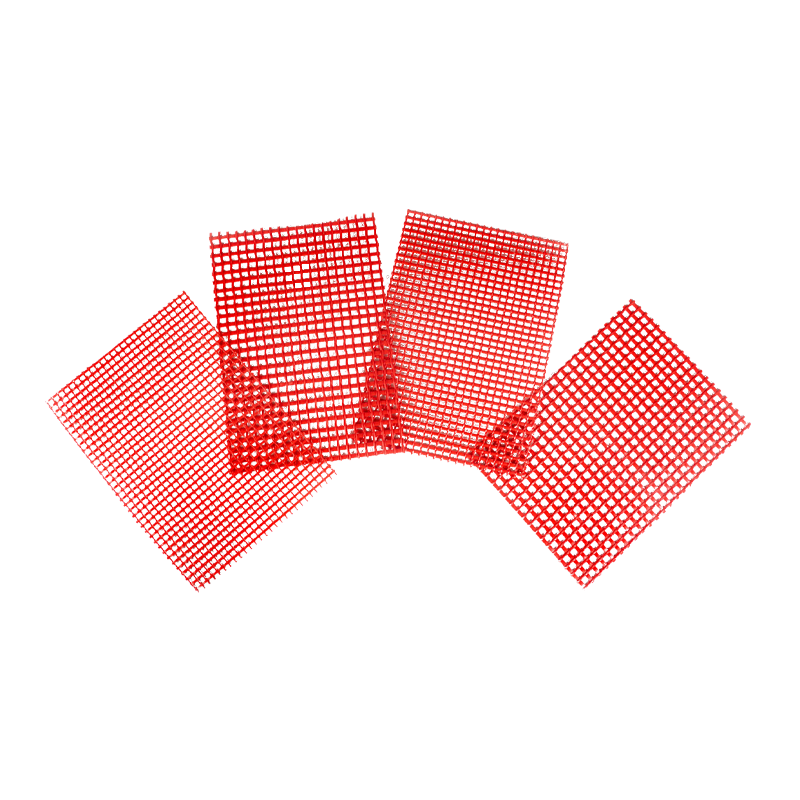
Alkali resistant fiberglass mesh tape is a narrow-width woven mesh, usually supplied in strips of 2 to 6 inches wide, made from glass filaments arranged in a square grid of 9 x 9 or 10 x 10 strands per inch, and finished with a protective polymer coating. It is sold in rolls of 25 to 150 meters and in fabric weights from roughly 75 to 300 grams per square meter (gsm).
Two features make it alkali resistant. The first is the glass composition: AR glass contains zirconia (ZrO2), which slows the attack of hydroxide ions on the silica network. The second is the coating: an acrylic or special polymer layer seals each strand so moisture cannot easily reach the fiber surface. A quick feel test tells you a lot. Bend a good tape and the coating stays on the glass. Bend a cheap one and the coating powders off or cracks, leaving bare shiny fibers that will be vulnerable in cement.
| Property | Paper drywall tape | Ordinary fiberglass mesh | Alkali resistant fiberglass mesh |
|---|---|---|---|
| Alkali protection | None, paper weakens when wet | None or limited, glass loses strength in high pH | Polymer coated, AR glass composition |
| Typical substrate | Drywall compounds | Drywall and low-movement repairs | Cement board, thin-set, render, EIFS |
| Behavior on cement board | Blisters and cracks | Cracks within months | Remains strong |
| Standard width | 2 in / 51 mm | 1.5 to 4 in | 2 to 6 in |
The table shows the practical difference. A tape made for drywall is not weaker by accident; it was designed for a neutral pH environment. Cementitious adhesives and mortars change the chemistry completely, and that is exactly where the alkali-resistant construction becomes essential.
Why Alkali Resistance Matters in Cement Assemblies
The reason is straightforward: the environment inside fresh mortar is highly alkaline, and unprotected glass cannot survive there. Thin-set mortar and cement paste have a pore water pH of roughly 12.5 to 13.5. Hydroxide ions dissolve the silica network of ordinary E-glass fibers, creating microcracks that grow under load. A non-alkali resistant mesh can lose most of its tensile strength in the first months of service, silently, inside the joint you believed was reinforced.
That is why professional tile specifications, including ANSI A108 methods and TCNA handbook procedures, require alkali-resistant fiberglass mesh tape at cement board joints. Building codes and board manufacturers carry the same instruction: all seams, edges, corners, and openings must be reinforced with alkali-resistant tape embedded in mortar. The rule exists because a degraded tape turns a reinforced seam into a planned crack.
The symptoms of the wrong tape are consistent:
- A crack that follows the seam exactly, even when the tile looks fine
- A hollow sound when tapping over the joint
- Efflorescence, the white powdery deposit, around the crack in wet areas
- Bare, shiny glass fibers visible when the joint is opened
Where to Use Alkali Resistant Fiberglass Mesh Tape
Use it on every seam, corner, edge, and fixture opening that will be covered with cement-based or highly alkaline material. The shortest rule is this: if the joint will touch thin-set, render, lime plaster, or an exterior insulation finish system, it gets AR mesh tape.
- Shower and bathtub surrounds: all cement board seams, inside corners, and valve or pipe penetrations
- Floor tile assemblies: joints between cement backer units and transition joints at movement planes
- Plaster and render repair: bridging old cracks in cement or lime plaster before the finishing coat
- Exterior insulation and finish systems (EIFS): reinforcement at panel joints, window corners, and wall intersections
- Wet areas in commercial kitchens and laundries, where a cement-based waterproofing layer is applied
For larger facade areas, you usually do not reinforce with narrow tape. The same alkali-resistant coating technology is available on full-width 130/160 gsm outer wall mesh fabric, which is embedded in the render base coat across a whole elevation, while tape rolls remain the practical format for seams and corners.
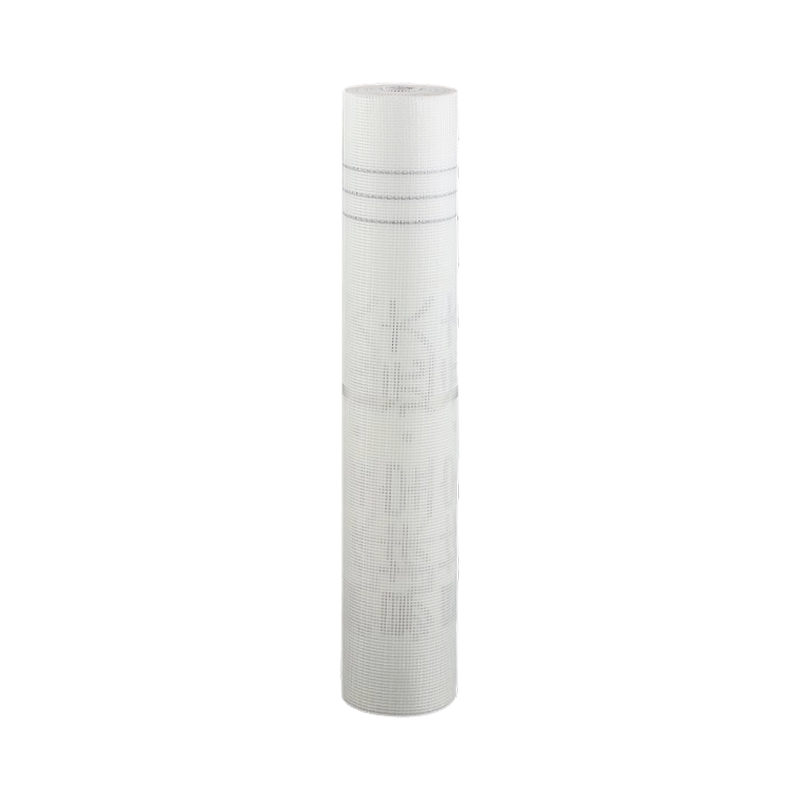
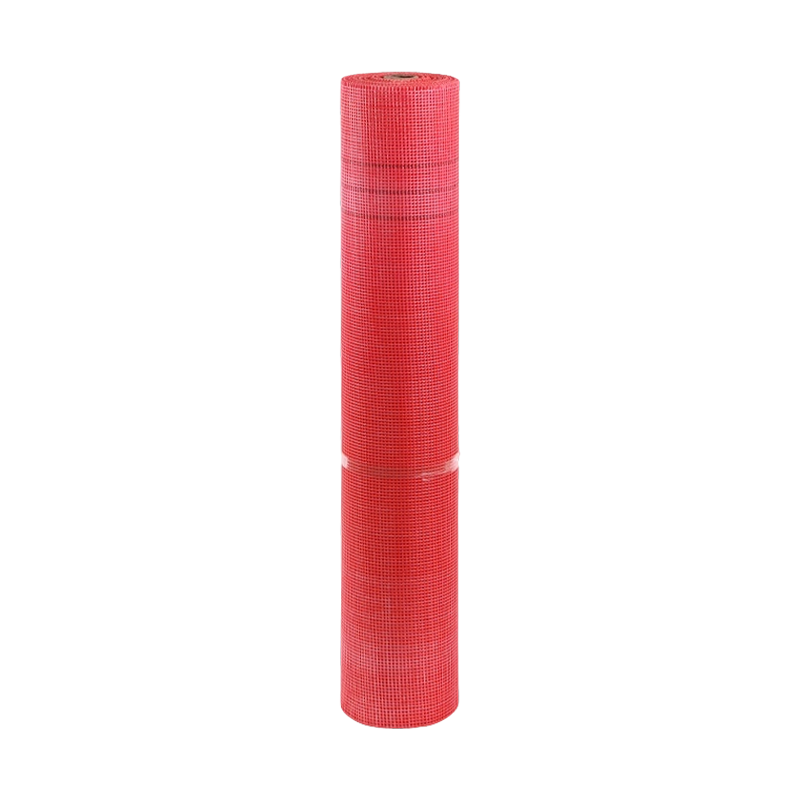
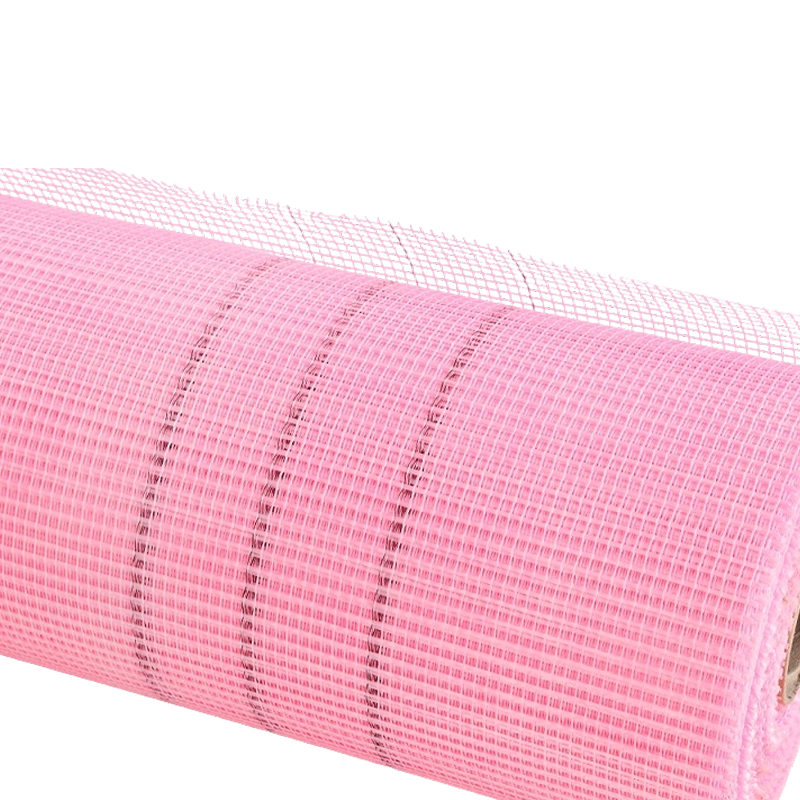 130-160g Alkali-Resistant Exterior Wall Fiberglass MeshFull-width reinforcing mesh for external wall insulation systems, offering high tensile strength and durable crack resistance for large facade areas.View Product →
How to Choose the Mesh Count, Width, and Weight
Choose by matching three numbers: mesh count, fabric weight in grams per square meter, and coating quality. Then pick a width that covers the joint and a roll length that fits the linear meters of seam on the job. Never buy on roll length alone; two rolls with the same width can be completely different materials.
Mesh count controls load distribution. A 10 x 10 grid is the normal choice for board joints and plaster; a denser 12 x 12 grid gives a smoother surface; a coarse 5 x 5 grid is used on heavy fabric where impact resistance matters. For standard tile work, 9 x 9 or 10 x 10 is sufficient.
Fabric weight is the best selection shortcut. For interior plaster and tile seams, an 80/130 gsm inner wall mesh tape is light, easy to bed, and strong enough for the small movements of a framed wall.
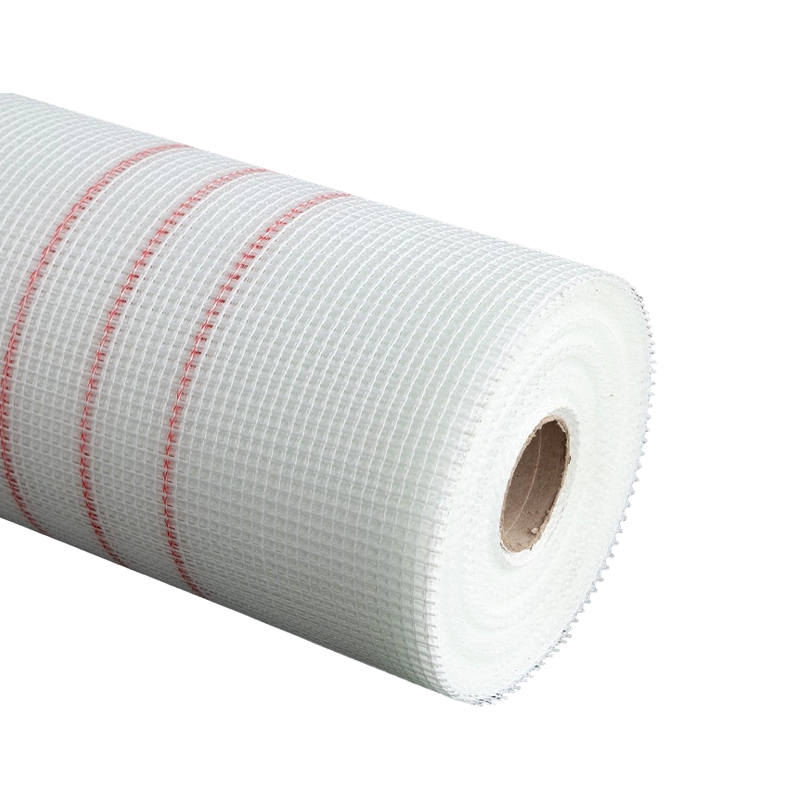 80-130g Lightweight Interior Wall Fiberglass MeshBalanced medium-weight mesh for interior plaster and tile seams, providing reliable reinforcement with easy handling and good dimensional stability.View Product →
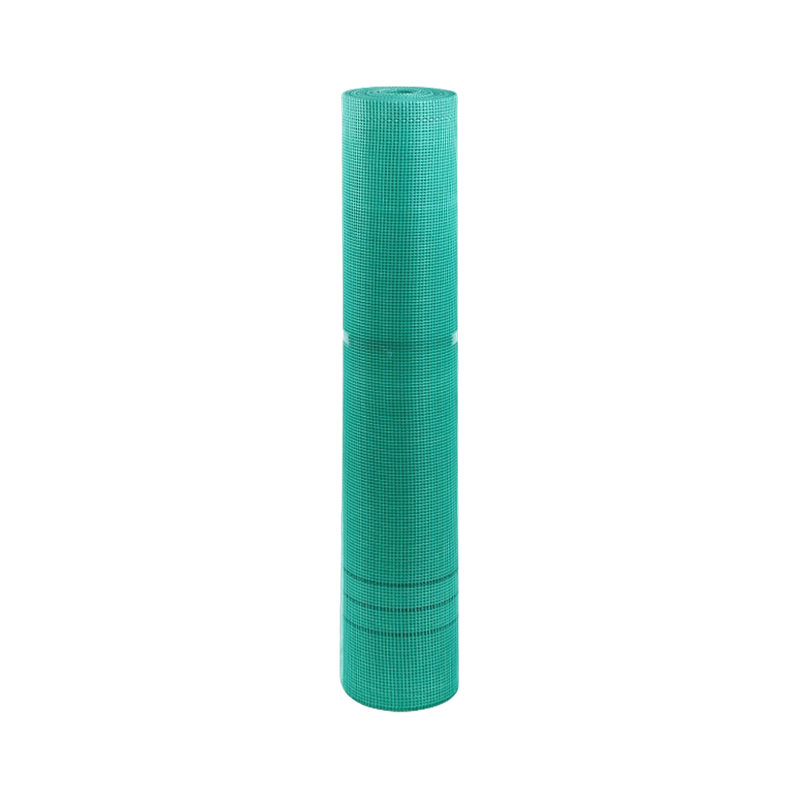
For balconies, garage floors, asphalt, or thick waterproofing layers, 300 gsm material distributes point loads and survives heavier abuse.
 300g Heavy-Duty Alkali-Resistant Fiberglass MeshHigh-weight reinforcing mesh for demanding applications like balconies and floors, distributing point loads with superior strength and alkali resistance.View Product →
| Application | Weight | Mesh count | Typical width | What to choose |
|---|---|---|---|---|
| Interior seams, plaster | 80-130 gsm | 10 x 10 | 2-4 in | Light coated tape |
| Exterior render, EIFS | 130-160 gsm | 9 x 9 | 4 in - 1 m | Midweight fabric or tape |
| Impact zones, asphalt, waterproofing | 300 gsm | 5 x 5 | 8 in - 1 m | Heavy-duty mesh |
A 2-inch tape cut from a 160 gsm roll has the same mass per area as the wide fabric, so do not assume narrow tape is automatically weaker. On the other hand, be wary of products where the label shows only "fiberglass tape" without a gsm value or coating description. If the packaging does not state the weight, the mesh count, or the alkali-resistant finish, ask for the mill's test report before buying. Cheap unbranded rolls are the most common source of the wrong tape problem.
If you need to compare complete systems, the fiberglass mesh fabric applications, selection, and installation guide takes you through long roll choices, coating quality checks, and mortar compatibility in more detail.
Installation Guidelines That Prevent Early Cracking
Installation quality decides whether the tape reinforces or simply decorates the joint. A tape that is not fully embedded, or that has an air pocket between the coating and the mortar, will crack regardless of its alkali resistance.
- Spread a thin, even bed of thin-set over the clean seam, roughly 2 to 3 mm thick, using the flat side of a trowel.
- Unroll the tape, press it into the fresh mortar, and keep it flat without pulling or stretching it.
- Embed it fully by passing the flat trowel over the tape in one direction, forcing mortar through the mesh until no bright white spots remain.
- Add thin-set again and skim approximately 1 mm over the tape, feathering the edges to make a flat surface.
- Overlap each roll end by at least 50 mm; for inside corners, fold the tape, and for outside corners use a pre-formed corner mesh or a wider strip.
- Let the embedment cure for at least 24 hours, or according to the mortar's instructions, before tiling, and check that the joint is flat before you continue.
Frequently Asked Questions
Can I use regular drywall tape on cement board?
No. Paper tape blisters in wet cementitious environments, and ordinary mesh will be attacked by alkali. If you have already used the wrong tape, remove the affected seam down to the board, clean the area, and re-tape with AR mesh. Patching over the wrong tape only postpones the crack.
How do I know a tape is truly alkali resistant?
Look for the words "alkali resistant" on the label, plus a declared weight and mesh count. Ask the supplier for the alkali-resistance test report; reputable manufacturers usually test to standards such as GB/T 29906 and report retained tensile strength after alkali soaking. You can also screen a small sample by soaking it in saturated lime water for a week; a true AR tape keeps most of its stiffness and strength, while an uncoated tape becomes noticeably limp.
What width and roll length do I need for a shower?
A typical shower has about 6 to 8 linear meters of cement board seam. One 2-inch x 50-meter roll covers it with margin, plus waste for corners. For inside corners, prefer 4-inch tape or fold a 2-inch tape; for outside corners, use corner mesh or cut AR fabric strips 4 inches wide.
Is fiberglass mesh tape fire resistant?
Glass fibers do not burn. The polymer coating may smoke and char when exposed to an open flame, but the glass structure remains intact. Fiberglass mesh products are widely used as reinforcement in fire-rated wall assemblies, although the rating of the complete system depends on the board, insulation, and coating layers, not on the tape alone.
What is the difference between tape weight and mesh count?
Weight (gsm) describes how much glass and coating is in a square meter of fabric; mesh count describes the grid density. A heavy tape can have an open grid, and a dense mesh can be light. For most board seams, a 10 x 10 mesh in 100 to 130 gsm material is the right compromise. For exterior or impact-prone surfaces, increase the weight before changing the mesh.
Alkali resistance is not a marketing add-on; it is a compatibility requirement. When a joint will sit inside cement, thin-set, or render, the only reliable reinforcement is a polymer-coated alkali resistant fiberglass mesh tape with a documented weight and mesh count, installed fully embedded in a compatible mortar. If you are still comparing products, the supplier's technical resource library includes selection overviews and installation guidance that you can use as a first pass before ordering.