English
 中文简体
 Español
A flooring contractor pricing a 1,200 m² warehouse slab asks two suppliers for "fiberglass mesh flooring" and gets numbers that differ by a factor of forty: a 160 g/m² alkali-resistant fabric at a few cents per square metre, and a moulded FRP mini-mesh grating panel quoted by the square metre of finished deck. Both quotes are correct. They answer different questions.
The short answer: fiberglass mesh flooring normally means mesh fabric embedded inside a screed, self-levelling compound or resin topping to control cracking. It means FRP grating only when the mesh itself becomes the walking surface — a plant-room walkway, a marina deck, a wet process area.
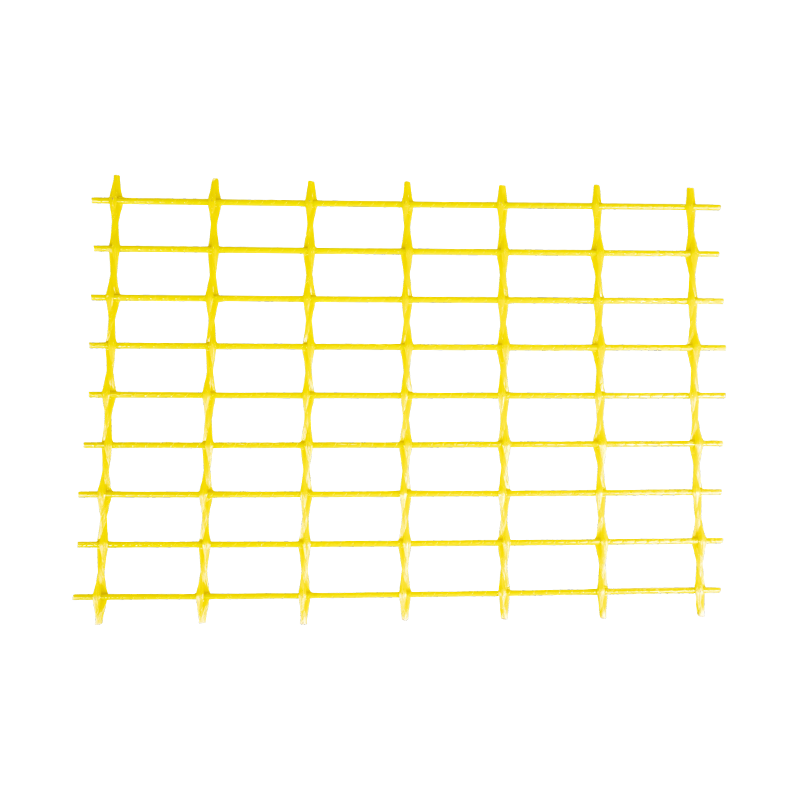
Mesh fabric is a woven or laid scrim of glass filament yarns, usually 80–300 g/m² with an aperture between 4 and 10 mm, bonded with an acrylic or styrene-butadiene binder. In contact with cement it has to be alkali-resistant (AR) glass, which carries roughly 14.5–16.5% zirconia in its chemistry. FRP grating is a different animal: a moulded or pultruded composite panel whose bearing bars and cross bars form a load-bearing grid, with a second fine grid added in "mini mesh" versions so tools, heels and small parts cannot drop through.
One question separates the two before anyone mentions price: will a person stand on the mesh? If no, you need fabric, the right embedment depth and AR glass. If yes, fabric will not carry footfall, and you need a panel plus a structural support plan.
Content
- 1 Two Products Sold Under One Search Term
- 2 Embedding Mesh Correctly: Position Beats Weight
- 3 What 80, 130, 160 and 300 g/m² Actually Buy You
- 4 When the Mesh Is the Floor: FRP Grating
- 5 Heavy Loads: GFRP Mesh Sheets and 300 g/m² Fabric
- 6 What to Check Before the Mesh Ships
- 7 Five Failures That Trace Back to Specification
- 8 Frequently Asked Questions
Two Products Sold Under One Search Term
The two families share glass reinforcement and almost nothing else, which is why a fabric quotation and a grating quotation cannot be compared line by line.
| Parameter | Mesh fabric (embedded) | FRP mini-mesh grating (walking surface) |
|---|---|---|
| Function | Crack control and tensile reinforcement inside the topping | The finished, load-bearing walking surface |
| Format | 80–300 g/m² roll goods, 0.3–0.6 mm thick | Rigid panels, typically 25–50 mm deep |
| Aperture | 4 × 4 mm to 10 × 10 mm | 38 × 38 mm grid with 6–8 mm mini-mesh openings |
| Chemistry | AR glass plus organic binder | Polyester, vinyl ester or phenolic resin with glass reinforcement |
| Installation | Embedded in wet mortar with 100 mm laps | Bolted or clamped to a support frame |
| Typical failure when mis-specified | Mesh sits on the surface, never bonds, cracks return | Undersized supports, flexing, wear at cut edges |
Mixing them up is expensive in both directions. Fabric laid as a walking surface tears under foot traffic within weeks; a 30 mm grating panel buried in a screed wastes money, adds thickness and creates a debonding plane exactly where the topping needs to grip.
Embedding Mesh Correctly: Position Beats Weight
Position decides whether mesh works, not weight: a 160 g/m² fabric sitting in the upper third of a topping outperforms a 300 g/m² fabric pressed flat onto the substrate, because reinforcement only acts where the tensile stress actually develops — close to the surface.
- Place the mesh in the upper third of the topping, roughly 10–15 mm below the finished level in a 40–60 mm screed.
- Keep at least 3 mm of cover in thin self-levelling work, and 5 mm wherever the floor takes traffic.
- Lap a minimum of 100 mm, and stagger the laps so four layers never meet at one point.
- Roll out under tension. A wrinkle is a void, and a void is where the next crack starts.
- Turn the mesh 100–150 mm up walls and around penetrations, cutting a cross and folding it flat.
- Never lay mesh on a slip membrane or insulation board; it must be wetted by the mortar to do anything at all.
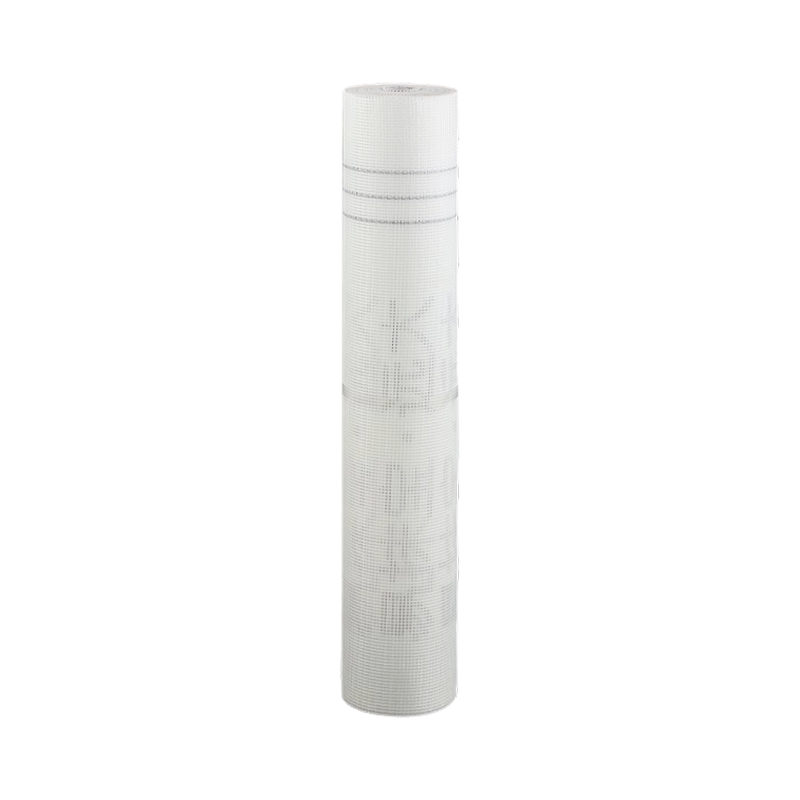
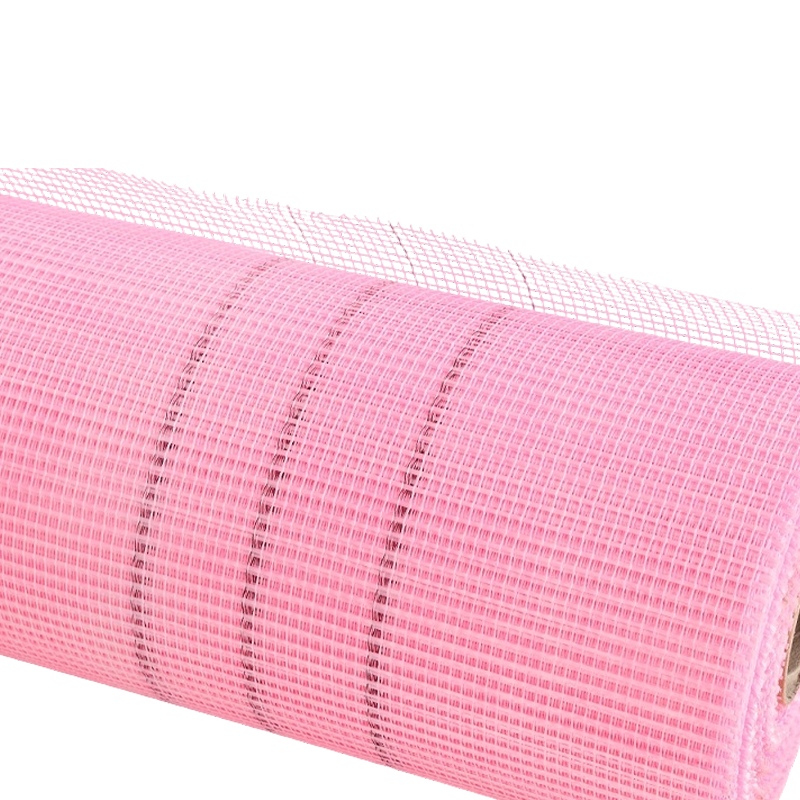 130–160 g/m² Alkali-Resistant Exterior Wall Fiberglass MeshAlkali-resistant 130–160 g/m² mesh for exterior wall insulation systems, intended for near-surface reinforcement where tensile stress develops.View Product →
Ask for a written method statement that pins down those six points, then inspect the first 20 m² before the pour continues. Most "mesh failures" we are called about turn out to be placement failures reported as material failures. Our fiberglass mesh fabric applications, selection and installation guide follows the same sequence for wall systems, where the logic is identical.
| Topping | Mesh grade | Cover over mesh | Lap |
|---|---|---|---|
| Sand-cement screed, 40–60 mm | 160 g/m², 4–5 mm aperture | 10–15 mm | 100 mm |
| Self-levelling compound, 5–10 mm | 80–130 g/m², 4 mm aperture | 3 mm minimum, 5 mm preferred | 100 mm |
| Epoxy or PU resin topping | 100–160 g/m², resin-compatible binder | Full wet-out, 1–2 mm minimum | 50–100 mm |
| Heavy-duty industrial overlay | 300 g/m² or GFRP mesh sheet | 15–25 mm, per structural design | 100–150 mm |
What 80, 130, 160 and 300 g/m² Actually Buy You
Weight buys tensile strength and abrasion tolerance, not immunity from cracking — a heavier roll does not fix a floor that has no movement joints.
The practical difference shows up in handling as much as in performance. The 80 g and 130 g grades drape around curves and wet out in seconds, which is why they dominate interior skim coats and resin coves. The 160 g grade is the workhorse for cementitious floors: strong enough for general traffic, still flexible enough to follow a slightly uneven substrate. At 300 g the fabric becomes stiff, drinks more binder and needs a richer mix around it.
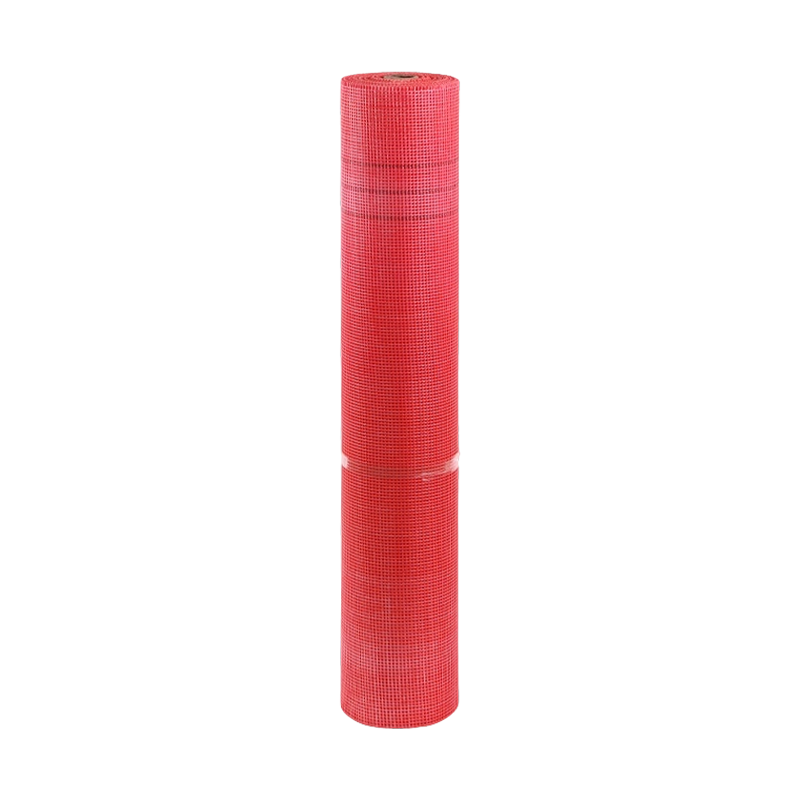
 300 g/m² Reinforced Alkali-Resistant Fiberglass Mesh FabricA 300 g/m² reinforced mesh for cement mortar, offering higher tensile strength and alkali resistance when lower-weight fabrics are not enough.View Product →
| Weight | Typical use | Tensile strength | Notes |
|---|---|---|---|
| 80 g/m² | Interior skim coats, low-stress repairs | Roughly 500–750 N/50 mm | Very conformable; no traffic exposure |
| 130 g/m² | Interior floors, light screeds, resin coves | Roughly 1,000–1,200 N/50 mm | Best balance of cost and drape |
| 160 g/m² | Exterior and general floor reinforcement | Roughly 1,200–1,500 N/50 mm | Default grade in cementitious systems |
| 300 g/m² | Heavy-duty slabs, overlays, high point loads | About 2,000 N/50 mm and above | Stiffer; needs a richer mix to wet out |
If you are weighing grades across a project, the full alkali-resistant fiberglass mesh fabric range covers 80, 130, 160 and 300 g/m² in one place, which makes side-by-side comparison on price per kN rather than price per roll far easier.
When the Mesh Is the Floor: FRP Grating
If people will walk on the mesh itself, fabric is the wrong specification and moulded FRP mini-mesh grating is the right one.
Mini-mesh grating is chosen where both load and small-object safety matter: offshore walkways, water treatment platforms, marina docks, food plants with daily washdown, and any deck where a dropped bolt must not fall through to the level below.
- Depth: 25–38 mm for pedestrian duty, 38–50 mm where trolleys or light vehicles cross.
- Support spacing: typically 600–1,200 mm, set by the panel's published load-deflection data, not by habit.
- Mini-mesh openings of 6–8 mm keep heels, tools and small parts above the deck.
- Resin choice drives service life: vinyl ester for acids and chlorides, isophthalic polyester for general industrial air, phenolic where fire and low smoke matter.
- Slip resistance comes from a grit-bonded or concave profile — a smooth top on a wet dock is a liability claim waiting to happen.
- Thermal expansion runs at roughly 1.5–2.5 × 10⁻⁵ per °C, so long runs need gaps and slotted fixings rather than rigid bolting.
Grating is not a cure-all for point loads. A pallet truck wheel on an unsupported span will flex the panel and fatigue the resin, so span and wheel load have to be checked before the panel depth is chosen.
Heavy Loads: GFRP Mesh Sheets and 300 g/m² Fabric
Where an overlay meets forklift traffic, chemical spillage or repeated point loads, a single layer of flexible fabric is not enough reinforcement, and an epoxy-based GFRP mesh sheet is the more honest choice.
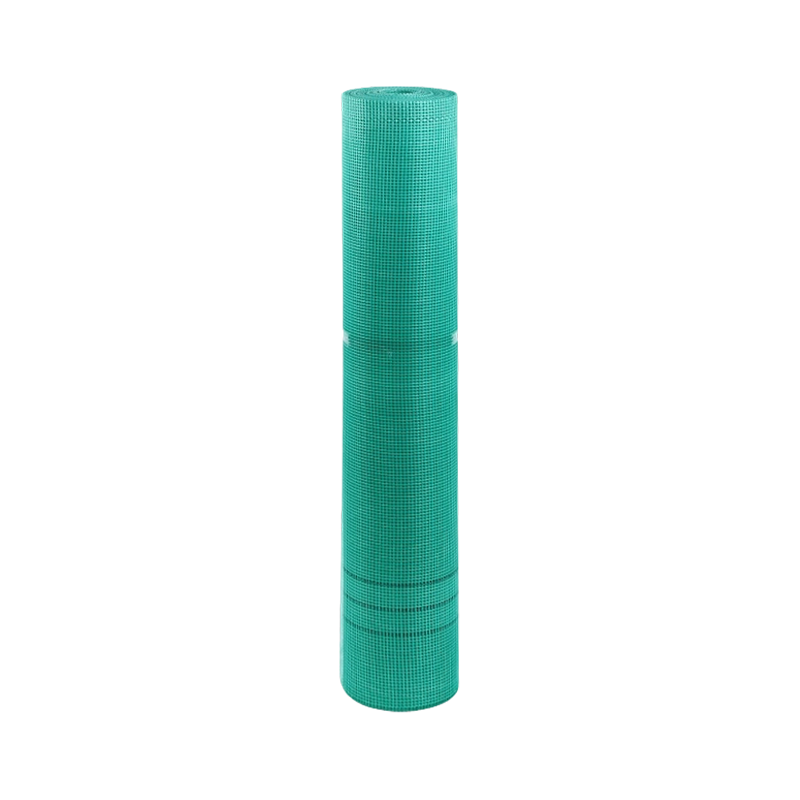
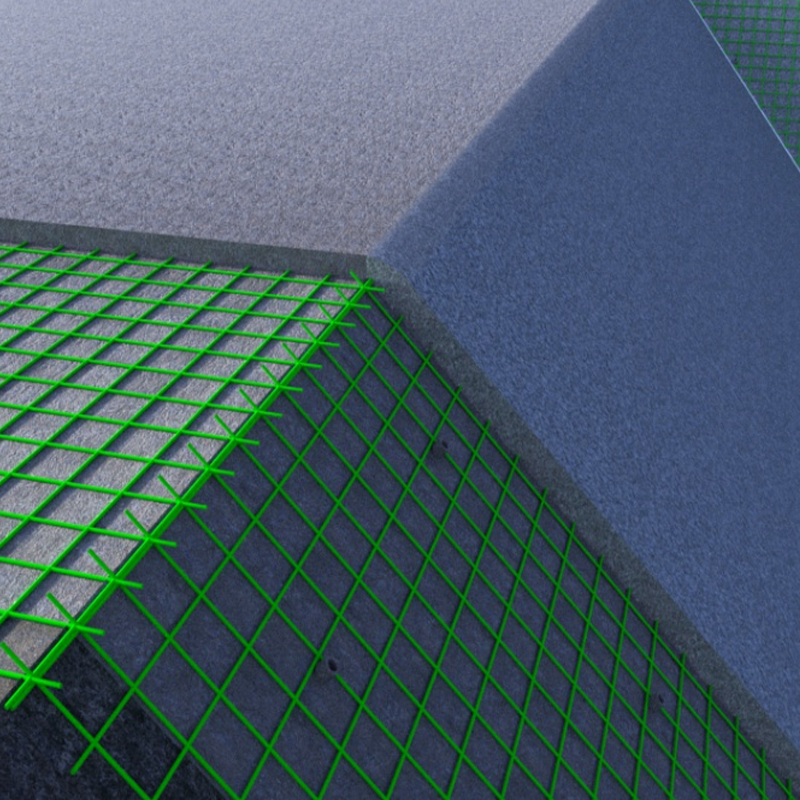 Epoxy GFRP Mesh for Demanding Overlay ReinforcementEpoxy resin GFRP mesh adds stiffness, corrosion resistance and electrical insulation for overlays exposed to traffic, spills or repeated point loads.View Product →
The trade-off is straightforward. A 300 g/m² fabric conforms to any profile, costs little and is installed by the same crew that places the mortar; an epoxy GFRP mesh sheet of 2–5 mm thickness with a 50 × 50 mm grid adds stiffness, resists water permanently and will not corrode in a wet process area. Fabric wins on cost and drape, the sheet wins on rigidity and chemical resistance. Neither belongs in a 5 mm self-levelling layer, where the thickness simply cannot cover them.
What to Check Before the Mesh Ships
A two-line specification — "fiberglass mesh, 160 g" — cannot be bought against safely, so put these eight points in the purchase order.
- Glass type and zirconia content, with an alkali-resistance result rather than a marketing claim.
- Tensile strength and elongation in warp and weft, reported for the actual batch.
- Binder type and loss on ignition, which tells you how much of the quoted weight is glass.
- Aperture tolerance and roll dimensions, including any allowed deviation in length.
- Moisture-proof packaging, since damp mesh cakes on the roll and blocks wet-out.
- Edge quality — frayed selvedges waste the first and last 100 mm of every roll.
- Compatibility with the topping chemistry: alkaline mortar, epoxy, polyurethane and cement all behave differently.
- Consistent supply across phases; a change of binder mid-project shows up as a visible lap line.
Five Failures That Trace Back to Specification
Almost every problem traced back to a decision made at the quotation stage rather than at the trowel.
- Reflective cracks return within a season — the mesh was placed too low in the section to intercept the stress.
- Mesh "grinning" through the finish — insufficient cover or poor wet-out, often from a stiff mix.
- Delamination along laps — no 100 mm lap, or every lap aligned in one straight line down the bay.
- Mesh turns brittle in an alkaline screed within months — E-glass was substituted for AR glass.
- Fabric used as a walking surface — torn through in weeks; the correct product was a grating panel.
Frequently Asked Questions
Can I use fiberglass drywall tape instead of mesh fabric on a floor?
No. Drywall tape is typically 55–75 g/m², adhesive-backed and not alkali-resistant, so it offers a fraction of the tensile capacity and degrades inside a cementitious screed.
How much overlap does floor mesh need?
100 mm is the working minimum for screeds and self-levelling compounds, increased to 150 mm on heavy-duty overlays; laps should be staggered rather than stacked in one line.
Does mesh stop cracks from appearing altogether?
No. It distributes stress and holds a crack tight, but it cannot absorb the movement of a live joint, a slab that is still shrinking, or a floor without isolation joints at columns and thresholds.
Is the same fabric suitable under epoxy coatings?
Only if the binder is compatible with the resin. Many cement-grade fabrics wet out poorly in epoxy; check the resin supplier's recommendation before embedding.
Is FRP mini-mesh grating safe for barefoot traffic?
Yes, when the openings are 6–8 mm and the top has a grit or concave profile, which is why it is widely used on pool decks and marina walkways.
Choosing fiberglass mesh flooring comes down to two questions asked before the order is placed: is the mesh buried in the topping or walked on, and where exactly will it sit in the section? Answer those honestly and most of the failure modes above disappear at the quotation stage, long before the first bag of mortar is opened.